

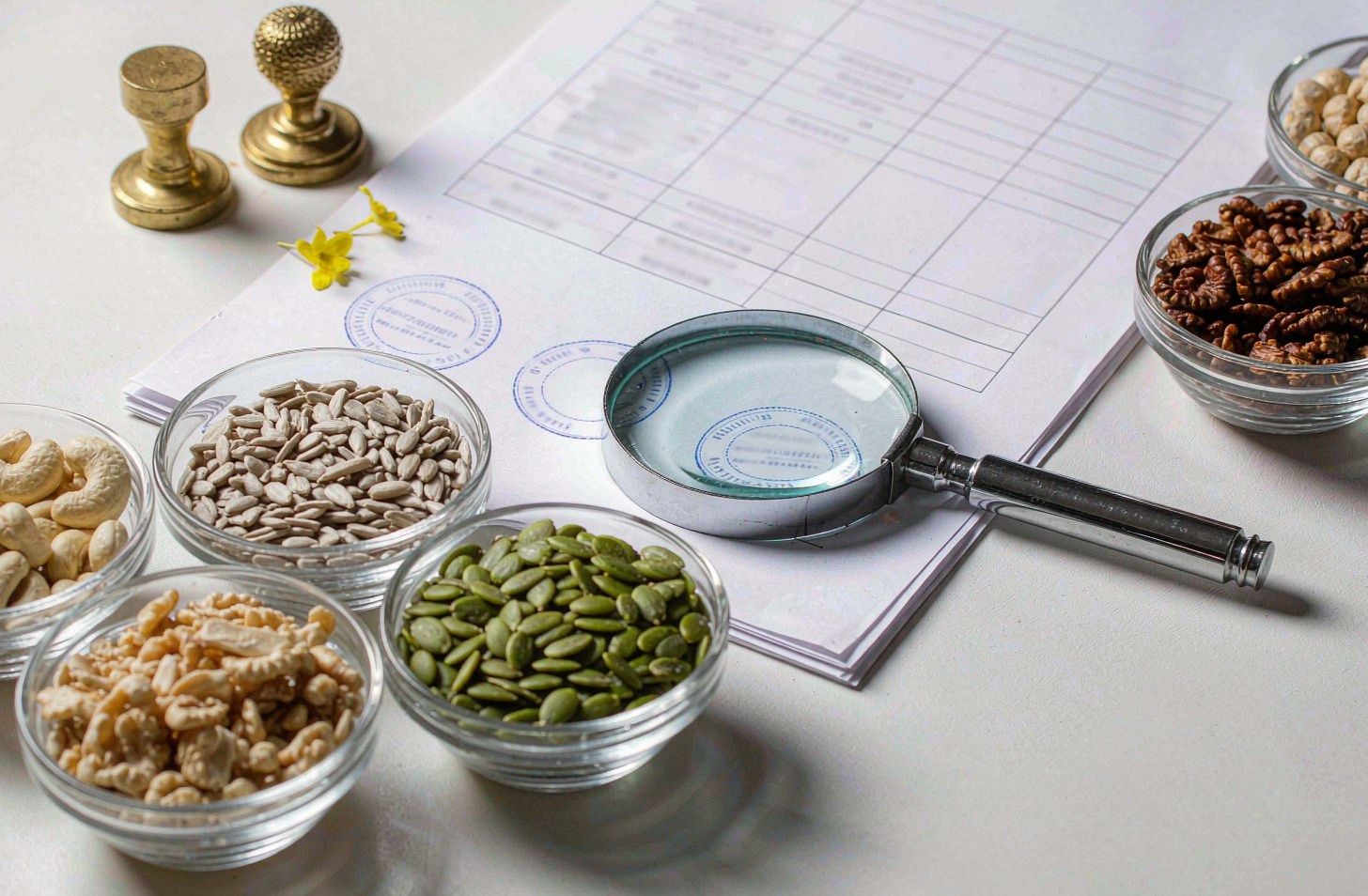
What Certificates Are Required to Import Nuts from China?
Importing nuts and seeds from China requires more than a purchase order and a shipping line. Customs authorities, food-safety regulators, and retail buyers in your country will ask for a specific set of certificates and test reports before your shipment can clear the border or reach the shelf. Knowing which documents matter — and how to verify them — protects your business from port detention, rejected lots, and damaged buyer relationships. This guide explains the certificates typically required to import walnuts, cashews, pecans, pumpkin seeds, and sunflower seeds from China, what each one proves, and how a professional supplier like Ouji International prepares them.
Whether you are a food manufacturer, wholesale distributor, or trading company bringing Chinese nuts into Europe, the Middle East, North America, or Asia, the checklist below is designed for real-world B2B sourcing.
Why Certificate Compliance Matters for Nut Importers
Edible nuts and seeds are high-risk foods. They are vulnerable to aflatoxin contamination, pesticide residues, heavy metals, and allergen cross-contact. Because of this, importing countries apply strict controls at three levels: the exporter’s factory, the product itself, and the border documentation. A missing or invalid certificate can trigger:
- Container detention at the destination port;
- Mandatory re-inspection or fumigation;
- Partial or full rejection of the shipment;
- Fines, blacklisting, or loss of retail contracts;
- Delays that spoil delivery schedules to your own customers.
The right certificates do more than satisfy customs. They show that your supplier runs a controlled, traceable supply chain — the baseline for any long-term B2B relationship.
Business and Export Registration Documents
Before discussing food-safety certificates, confirm that your supplier is legally allowed to export. These documents are not certifications in the technical sense, but they are required for every shipment and are often requested by banks for letters of credit.
| Document | What It Confirms | Why Importers Need It |
|---|---|---|
| Business License | The company is registered in China and legally exists. | Verifies supplier identity and legal capacity to contract. |
| Export License / Foreign Trade Registration | The company is authorized to export goods. | Required for customs declaration in China and for trade financing. |
| Customs Registration Code | The exporter is registered with China Customs. | Needed for the Chinese export clearance process. |
| Tax Registration Certificate | The company is registered for VAT and tax compliance. | Important if you plan deducting VAT or issuing formal tax invoices. |
Reputable exporters keep these documents ready and will share them during your first vetting call. If a supplier hesitates, treat it as a warning sign.
Food-Safety Management System Certificates
These certificates prove that the supplier’s facility follows internationally recognized procedures for food safety and quality management. They are usually audited annually by accredited third-party bodies.
HACCP and ISO 22000
HACCP (Hazard Analysis and Critical Control Points) identifies biological, chemical, and physical hazards in the production process. ISO 22000 builds on HACCP by adding management-system requirements across the entire food chain. For nut exporters, critical control points typically include raw-material intake, drying, storage temperature, metal detection, and packaging.
ISO 9001
ISO 9001 is a general quality-management certificate. It does not guarantee food safety by itself, but it shows that the supplier documents processes, handles complaints, and conducts management reviews — all signs of operational maturity.
BRC and IFS (Retail and Manufacturer Focus)
If you supply European supermarkets or large food manufacturers, your buyer may require BRCGS Food Safety or IFS Food. These are retailer-driven standards with stricter requirements for site standards, product control, and traceability. Not every Chinese nut exporter holds them, so confirm early if your target market demands them.
Religious and Ethical Certifications
Many of the fastest-growing nut-import markets have religious or ethical labeling requirements. Ouji International exports to the Middle East, North Africa, Southeast Asia, and other regions where these certificates are essential.
HALAL Certificate
HALAL certification confirms that the product, ingredients, and processing environment comply with Islamic dietary law. For nut and seed products, the main concern is usually cross-contact with non-HALAL additives or processing aids. A valid HALAL certificate should name the certifying body, the product scope, and the production facility.
Kosher Certificate
Kosher certification is required by buyers supplying Jewish communities or kosher retailers, especially in the United States, Israel, and parts of Europe. Nuts are generally plant-based, but certification confirms no cross-contact with non-kosher equipment or additives.
Product-Safety Test Reports
Even with good system certificates, every lot of nuts should be tested before shipment. Ask your supplier for third-party test reports that match the destination country’s limits.
| Test Type | What It Detects | Typical Standard Reference |
|---|---|---|
| Aflatoxin | Carcinogenic mold toxins common in nuts and seeds | EU Regulation 1881/2006; FDA action levels |
| Pesticide Residues | Chemical residues from farming | EU MRLs; CODEX Alimentarius |
| Heavy Metals | Lead, cadmium, arsenic, mercury | EU 1881/2006; national food standards |
| Microbiological Tests | Salmonella, E. coli, total plate count | ISO methods; buyer specifications |
| Moisture and Admixture | Quality and shelf-life indicators | Contractual specification |
Insist that tests are conducted by an internationally recognized laboratory such as SGS, Bureau Veritas, Intertek, or Eurofins, and that the report references the specific batch number or invoice.
Phytosanitary Certificate
A Phytosanitary Certificate is issued by China’s plant-protection authority and confirms that the nuts or seeds have been inspected and are free from quarantine pests and diseases. It is required by most countries for unprocessed or minimally processed plant products. Without it, your shipment may be refused entry or fumigated at your expense.
For example, the European Union and many Middle Eastern countries require a phytosanitary certificate for in-shell walnuts, pumpkin seeds, and sunflower seeds. Always check the latest phytosanitary requirements of your destination country before shipping.
Certificate of Origin
The Certificate of Origin states the country where the goods were produced or substantially transformed. It is used for:
- Calculating import duties and preferential tariff rates under free-trade agreements;
- Proving compliance with country-of-origin labeling rules;
- Satisfying buyer or retailer requirements.
China has trade agreements with many countries and regions, including ASEAN, South Korea, Australia, and others. The correct certificate of origin can reduce duty costs significantly, so confirm which form your customs authority accepts.
Organic Certification (When Applicable)
If you are sourcing organic pumpkin seeds, sunflower seeds, or walnuts, you need organic certification that matches your market. Common standards include:
- EU Organic — required for products labeled organic in the European Union;
- USDA NOP — required for organic claims in the United States;
- JAS Organic — required for organic products sold in Japan.
Chinese organic farms must be inspected and certified by an accredited body, and the certificate must cover the specific product and processing facility. A generic “organic” claim without documentation should not be accepted.
Packaging and Labeling Compliance
Although not a certificate, correct packaging and labeling are inspected at customs and by buyers. Typical requirements include:
- Product name and botanical identification;
- Net weight and lot number;
- Country of origin;
- Ingredient list and allergen statement;
- Best-before date or production date;
- Storage conditions;
- Importer contact details for the destination market.
Many importers work with suppliers to design bilingual or market-specific labels before production. Ouji International supports custom packaging and private-label solutions for B2B buyers.
How to Verify a Certificate Is Genuine
Fake or expired certificates are a real risk in international trade. Use this verification routine before you commit to a first order:
- Check the certifying body — search the issuer’s website for the certificate number or registered facility name.
- Confirm validity dates — certificates expire; ask for the latest version and confirm it covers the shipment period.
- Match scope to product — a HACCP certificate for a walnut factory does not cover pumpkin seeds processed at a different site.
- Request original scanned copies — not screenshots or low-resolution photos.
- Use third-party inspection — hire SGS, Bureau Veritas, or another inspection body to verify documents and audit the facility if the order value justifies it.
Country-Specific Requirements to Watch
Beyond the common certificates, some markets impose extra rules. Examples include:
- European Union — strict aflatoxin limits for tree nuts and groundnuts; TRACES system registration for certain food imports.
- United States — FDA food facility registration; Prior Notice; FSMA foreign supplier verification program.
- Middle East — HALAL certificates widely required; some countries ask for health certificates from Chinese authorities.
- Japan — positive-list system for agricultural chemicals; JAS organic if labeled organic.
- South Korea — import declaration and quarantine inspection; preferential tariffs under China-ROK FTA with correct origin documents.
Always consult a customs broker or import-compliance specialist in your country before the first shipment.
How Ouji International Handles Export Documentation
Hohhot Ouji International Co., Ltd. is an agricultural food exporter based in Hohhot, Inner Mongolia, established in 2013. The company operates 2 production processing plants and 6 automatic production lines, specializing in walnuts, walnut kernels, cashews, pecans, pumpkin seeds, pumpkin seed kernels, sunflower seeds, and sunflower kernels.
Ouji International supplies buyers across Europe, the Americas, Japan and South Korea, the Middle East, North Africa, and South America and prepares the full documentation package needed for smooth customs clearance, including:
- Business license and export registration;
- HACCP / ISO 22000 and ISO 9001 quality-system certificates;
- HALAL and Kosher certificates for religious-market buyers;
- Third-party test reports for aflatoxin, pesticide residues, heavy metals, and microbiological indicators;
- Phytosanitary certificates and certificates of origin;
- Commercial invoice, packing list, bill of lading, and insurance support.
If your market needs additional certificates — such as BRC, IFS, EU Organic, or a market-specific health certificate — the export team can guide you through the timing and cost.
Frequently Asked Questions
What certificates are required to import nuts from China?
The core certificates are business and export registration documents, HACCP or ISO 22000, ISO 9001, phytosanitary certificate, certificate of origin, and product test reports for aflatoxin, pesticides, and heavy metals. HALAL, Kosher, or organic certificates are added based on your market.
Do I need HALAL certification to import nuts into the Middle East?
Yes. Most Middle Eastern countries require HALAL certification for edible food products, including nuts and seeds. The certificate must be issued by a recognized body and name the production facility.
Who issues the phytosanitary certificate for nuts exported from China?
China’s General Administration of Customs and the agricultural/plant-protection authorities issue phytosanitary certificates. Your exporter applies for it after the goods pass inspection.
Can a supplier use one certificate for all products?
No. Certificates must match the product and the production site. A walnut certificate does not cover pumpkin seeds unless the scope explicitly lists both at the same facility.
How long are food-safety certificates valid?
Most certificates are valid for 12 months from the audit date, but some certifying bodies issue multi-year certificates with annual surveillance audits. Always check the expiry date before shipment.
Should I request test reports for every shipment?
For high-risk products like nuts and seeds, yes. Aflatoxin and microbiological results can vary by lot. Reputable suppliers provide test reports for each batch or pre-shipment sample.
What happens if a certificate is missing when the shipment arrives?
The shipment may be detained, re-inspected, fumigated, or rejected. In some cases, the importer faces fines or loses the right to import from that supplier. Complete paperwork before loading is the safest approach.
Does organic certification from China work in the EU?
Only if the certifying body is recognized by the EU and the product meets EU Organic Regulation requirements. Ask for the organic certificate and check it against the EU’s list of recognized control bodies.
Conclusion
Knowing what certificates are required to import nuts from China turns a risky guessing game into a structured compliance process. Start with business and export-registration documents, add food-safety system certificates, confirm product-specific test reports, and complete destination-market paperwork such as phytosanitary certificates and certificates of origin. For religious or premium markets, include HALAL, Kosher, or organic certification as needed.
If you are importing walnuts, cashews, pecans, pumpkin seeds, or sunflower seeds from China, contact Ouji International for a full certificate package, product samples, and export pricing tailored to your country. Our team has supported B2B buyers worldwide since 2013 and can help you clear customs with confidence.