

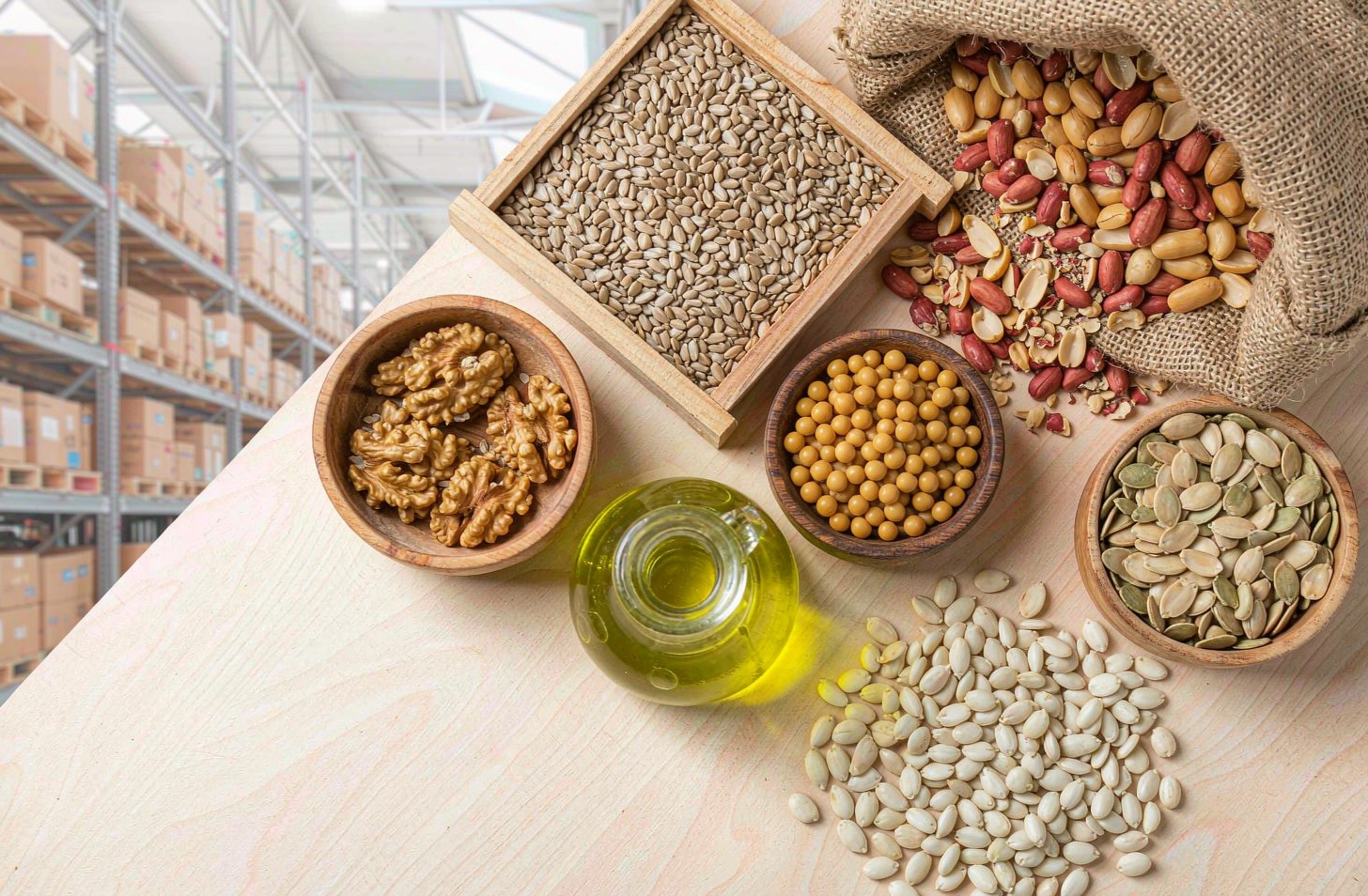
China Agricultural Food Supplier: A Complete Sourcing Guide
China is one of the world’s largest agricultural food exporters, supplying nuts, seeds, dried fruits, and processed ingredients to buyers across Europe, the Middle East, North America, and Asia. For importers and food manufacturers, finding the right China agricultural food supplier means gaining access to competitive pricing, large-scale production, and integrated processing — but it also requires knowing how to vet quality, verify certifications, and navigate export logistics. This guide explains what to look for, what to ask, and how to build a reliable supply chain from Chinese origin to your warehouse.
Whether you are sourcing walnuts, pumpkin seeds, sunflower seeds, or other agricultural commodities for retail, manufacturing, or wholesale distribution, the criteria below will help you choose a supplier that delivers consistent quality, complete documentation, and on-time shipments.
Why Source Agricultural Foods from China
China’s agricultural sector benefits from vast cultivation areas, decades of export experience, and modern processing infrastructure. Key advantages include:
- Scale and variety — major production belts for walnuts (Xinjiang, Yunnan), pumpkin seeds (Inner Mongolia, Xinjiang), sunflower seeds (Inner Mongolia, Heilongjiang), and more;
- Integrated supply chains — many exporters operate their own cleaning, grading, sorting, and packing plants, reducing handoffs and quality drift;
- Competitive export pricing — direct farm-to-factory sourcing keeps costs lower than many alternative origins;
- Experienced logistics networks — regular container shipments from Tianjin, Qingdao, Shanghai, and Shenzhen to global ports.
The main risk for overseas buyers is supplier inconsistency: varying quality between batches, incomplete export paperwork, or delayed communication. A structured vetting process eliminates most of these issues before the first order.
What a Reliable China Agricultural Food Supplier Should Offer
1. Integrated Processing and Quality Control
Look for suppliers who control processing in-house rather than relying on third-party mills. Capabilities to verify include:
- Automatic cleaning and grading lines — removes dust, stones, and foreign matter while sorting by size;
- Color sorting technology — eliminates discolored, moldy, or damaged pieces;
- Metal detection and X-ray inspection — non-negotiable for food-grade exports;
- Moisture control systems — ensures product stability during ocean transit;
- Hand-picking stations — final visual QC for premium grades and retail-ready lots.
Ask for a factory tour — live or video — and request photos of the processing lines. A transparent supplier will share this without hesitation.
2. Food-Safety Certifications
For edible agricultural products, certification is the baseline filter. At minimum, your supplier should hold:
- HACCP / ISO 22000 — food-safety management systems;
- ISO 9001 — quality management;
- HALAL and/or Kosher — required for Middle East, Southeast Asia, and Jewish-market supply chains;
- BRC or IFS — increasingly expected by European retailers and large food manufacturers.
Always confirm the certifying body and validity date, and verify that the scope covers the actual production facility. Certificates should match the exporter’s registered business name.
3. Clear Specifications and Sample Matching
A professional supplier sends a specification sheet with every sample. Before placing an order, confirm in writing:
- Product name and variety — e.g., Shine Skin pumpkin seeds, 5009 sunflower seeds, Xinjiang walnut halves;
- Grade and size — AA, AAA, or commercial grade; size ranges per 100 g or per ounce;
- Purity and admixture limits — e.g., 99% purity, ≤ 0.5% admixture;
- Moisture limit — usually ≤ 8–9% for nuts and seeds;
- Packing details — 25 kg PP bags, 50 kg bags, vacuum cartons, or custom retail packs.
The delivered lot should match the pre-shipment inspection report — not just the quote.
4. Complete Export Documentation
Incomplete paperwork is the leading cause of customs delays. Your supplier should routinely prepare:
- Commercial invoice and packing list;
- Certificate of origin;
- Phytosanitary certificate;
- Quality inspection report (moisture, admixture, purity, aflatoxin);
- HALAL / Kosher certificates where required;
- Bill of lading and insurance certificate.
For EU-bound shipments, confirm compliance with EU Regulation 1881/2006 on aflatoxin limits. For Saudi Arabia, confirm SABER registration in addition to HALAL.
Major Agricultural Food Products Exported from China
| Product Category | Key Origins | Common Grades / Specs |
|---|---|---|
| Walnuts & Walnut Kernels | Xinjiang, Yunnan, Shaanxi | Light halves, amber halves, pieces; 28 mm+, 30 mm+ |
| Pumpkin Seeds (in shell) | Inner Mongolia, Xinjiang, Gansu | Shine Skin, GWS, Snow White; 200–280 seeds/100 g |
| Pumpkin Seed Kernels | Inner Mongolia | AA, AAA grades; 99%–99.9% purity |
| Sunflower Seeds (in shell) | Inner Mongolia, Heilongjiang | 5009, 361, 363, 601 varieties |
| Sunflower Kernels | Inner Mongolia | Bakery grade, confectionery grade; 99% purity |
| Pecans | Guangdong, Yunnan | Halves, pieces; raw or roasted |
| Cashews | Imported raw, processed in China | W320, W240, LP, SW |
Many China agricultural food suppliers offer mixed-container loading, allowing buyers to combine 2–4 products in one shipment to optimize freight cost and inventory.
How to Evaluate Export Experience and Communication
Beyond equipment and certificates, assess the supplier’s operational maturity:
- Response time — do they reply within 24 hours with specific answers?
- Quote accuracy — can they quote FOB, CIF, and DDP correctly for your port?
- Sample policy — do they send pre-shipment samples promptly and match them to a written spec sheet?
- Third-party inspection — do they accept SGS, Bureau Veritas, or Intertek inspection before shipment?
- Reference buyers — can they provide 2–3 existing customer contacts in your region?
- After-sales support — do they handle claims, re-ships, or quality disputes professionally?
A supplier who hesitates on any of these points may be a trading company with limited control over quality — or worse, a broker with no physical facility.
Red Flags to Avoid
- Cannot name their processing plant location or show it on video;
- Quotes significantly below market range without explanation;
- Certificates are expired, blurry, or issued by unknown bodies;
- Refuses to send samples, sign a spec sheet, or accept third-party inspection;
- Demands 100% advance payment with no letter of credit or escrow for first orders;
- Communication is vague, evasive, or copied from generic templates.
Why Ouji International Is a Trusted China Agricultural Food Supplier
Hohhot Ouji International Co., Ltd. is an agricultural food exporter headquartered in Hohhot, Inner Mongolia — one of China’s most important production belts for pumpkin seeds and sunflower seeds. Founded in 2013, the company operates 2 production processing plants and 6 automatic production lines, exporting walnuts, pumpkin seeds, sunflower seeds, pecans, cashews, and other nuts to Europe, the Americas, Japan and South Korea, the Middle East, North Africa, and South America.
What global buyers typically value when working with Ouji:
- Origin advantage — direct sourcing from Inner Mongolia and Xinjiang farms ensures fresher stock and better price control;
- Stable quality systems — automatic cleaning, grading, color-sorting, and inspection at integrated facilities;
- Full documentation support — export paperwork, third-party inspection coordination, and customs clearance handled in-house;
- Flexible packing options — from standard 25 kg/50 kg PP bags to vacuum retail packs and private-label solutions;
- 10+ years of export experience — a team that understands the documentation, logistics, and quality standards of multiple destination markets.
Frequently Asked Questions
What is the minimum order quantity when sourcing from a China agricultural food supplier?
Most exporters accept trial orders of 1–5 tons for single products. Full container loads typically start at 12–13 tons (20 ft) or 24–26 tons (40 ft). Mixed-product containers are often possible for orders above 10 tons total.
Which Chinese regions are best for sourcing nuts and seeds?
Inner Mongolia leads in pumpkin seeds and sunflower seeds. Xinjiang is the top origin for walnuts. For buyers seeking origin-integrated suppliers, choosing an exporter based in or near these regions — like Hohhot — shortens lead times and improves quality control.
Do I need HALAL certification to import agricultural foods into the Middle East?
Yes. Most Middle Eastern countries require HALAL certification for edible nuts and seeds. Saudi Arabia also requires SABER product registration. Confirm both are current and scope-matched before placing your order.
How can I verify the quality before shipment?
Request a pre-shipment sample, approve a written specification sheet, and arrange third-party inspection (SGS, Bureau Veritas, or Intertek) before the container is sealed. A reliable supplier will support all three steps.
What documents do I need to import nuts and seeds from China?
Standard documents include: commercial invoice, packing list, bill of lading, certificate of origin, phytosanitary certificate, and quality inspection report. Market-specific certificates (HALAL, Kosher, or organic) should be added based on your destination.
Can Chinese agricultural food suppliers do private-label packing?
Yes. Many origin-based exporters offer custom-printed bags, vacuum-packed retail cartons, and branded labels. MOQs for custom packing are typically higher than standard bulk orders — usually 1–2 FCLs depending on the design.
Conclusion
A reliable China agricultural food supplier is one you can verify — on paper, in the sample, and in the container. Start by checking certifications and processing capability, lock quality specifications into a written contract, test with samples and a trial order, and choose an exporter with real plants, real export experience, and transparent communication.
If you are sourcing walnuts, pumpkin seeds, sunflower seeds, or other nuts and seeds in bulk, contact Ouji International for samples, current specifications, and export pricing. We will help you match the right product and grade to your market and deliver it on time, anywhere in the world.