

Shine Skin Pumpkin Seeds Supplier China: A Complete Buyer’s Guide
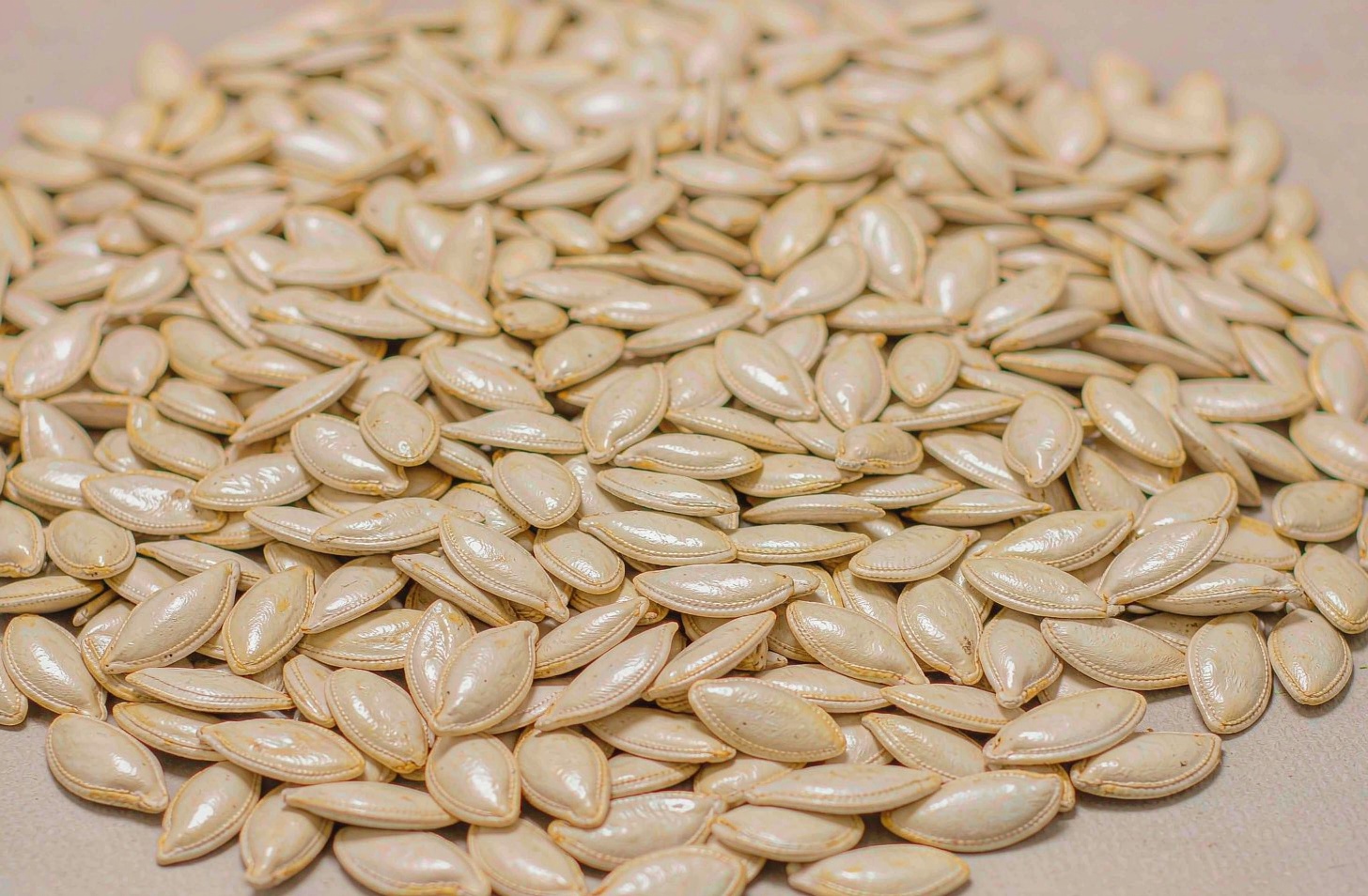
Shine Skin pumpkin seeds (known in Chinese as 光板, “Guang Ban”) are the most widely exported in-shell pumpkin seed variety from China. Recognized by their smooth, glossy beige-white shell and plump light-green kernel, Shine Skin seeds dominate the snack-food, bakery, and oil-pressing markets across Europe, the Middle East, and East Asia. Finding a reliable Shine Skin pumpkin seeds supplier in China means understanding the variety’s unique grading system, seasonal availability, and quality markers — then matching those specs to a supplier with origin-level processing capability.
This guide covers what Shine Skin seeds are, how they differ from GWS and Snow White types, the specifications buyers should lock into every contract, and how to evaluate a Chinese supplier for consistent bulk supply.
What Are Shine Skin Pumpkin Seeds
Shine Skin is a specific pumpkin seed cultivar grown primarily in Inner Mongolia, Xinjiang, and Heilongjiang — with Inner Mongolia producing the highest-quality lots due to its dry continental climate, long sunshine hours, and large temperature swings between day and night. These conditions produce seeds with:
- A smooth, lustrous shell that reflects light, giving the variety its name;
- Thin but strong hulls that crack cleanly when roasted, making them ideal for salted snack packs;
- Plump, light-green kernels with a mild, nutty flavor and low bitterness;
- High kernel-to-shell ratio — typically 65–72% depending on crop year and growing region.
In global trade, Shine Skin seeds are usually sold in-shell for roasting and snacking, or as kernels (pepitas) for bakery mixes, granola, and oil extraction. The in-shell market is the larger of the two, driven by demand in China, the Middle East, and Mediterranean Europe.
Shine Skin vs. GWS vs. Snow White: Which Should You Buy
| Feature | Shine Skin | GWS (Grow Without Skin) | Snow White |
|---|---|---|---|
| Shell appearance | Smooth, glossy, beige-white | Matte white, slightly rough | Pure white, flat finish |
| Kernel color | Light green | Pale green to white | Light green |
| Shell thickness | Thin-medium | Medium | Medium-thick |
| Best use | Roasted snacks, salted packs | Shelling, kernel export | Premium roasted retail |
| Main market | Middle East, Europe, China | Europe, North America | Japan, South Korea, EU |
| Price tier | Mid-range | Mid-to-high | Premium |
For buyers focused on volume snack production or wholesale distribution, Shine Skin offers the best balance of shell integrity, kernel yield, and cost. GWS is preferred when the end product is kernels-only, while Snow White commands a premium in gift-pack and high-end retail segments.
Key Specifications for Shine Skin Pumpkin Seeds
When sourcing from a Shine Skin pumpkin seeds supplier in China, the specification sheet is your quality contract. The following parameters should be agreed in writing before sampling:
Size Grading
Shine Skin seeds are graded by width and weight per 100 grams:
- 10–11 mm — standard grade for general roasting and bulk snack production;
- 11–12 mm — premium grade, preferred by Middle Eastern and European retailers;
- 12 mm and above — super-premium, often packed as branded retail product;
- Counts per 100 g — commonly 200–240, 240–260, or 260–280 seeds per 100 g; lower counts mean larger seeds.
Quality Parameters
| Parameter | Export Standard | Premium Standard |
|---|---|---|
| Moisture | ≤ 9% | ≤ 8% |
| Admixture | ≤ 0.5% | ≤ 0.3% |
| Imperfect seeds | ≤ 2% | ≤ 1% |
| Purity | 99% whole seeds | 99.5% whole seeds |
| Kernel yield | ≥ 65% | ≥ 70% |
| Color | Natural gloss, no discoloration | Uniform gloss, no blemishes |
| Aroma | Neutral, no rancidity | Fresh, nutty, no off-odors |
Packing and Shelf Life
- Standard export packing — 25 kg or 50 kg PP woven bags with PE inner liner;
- Vacuum packing — recommended for kernel exports or long transits;
- Retail-ready packing — 500 g, 1 kg stand-up pouches with custom branding;
- Shelf life — 12 months in dry, cool storage (below 15 °C, 60% RH).
How to Evaluate a Shine Skin Pumpkin Seeds Supplier
1. Confirm Origin and Harvest Timing
Shine Skin seeds are harvested in September and October each year. The best suppliers are based in or directly adjacent to the growing region — Hohhot and Bayannur in Inner Mongolia — because they can secure fresh crop quickly and control drying conditions. Ask:
- Where is your processing plant located relative to the farms?
- Do you buy directly from farmers or through intermediaries?
- What is your drying capacity, and is it mechanical or sun-drying?
Suppliers who dry mechanically within 48 hours of harvest typically deliver more stable moisture and lower mold risk than those relying on extended sun-drying.
2. Inspect Processing Capability
A professional supplier should have integrated processing lines, not just warehouse trading. Key equipment includes:
- Pre-cleaning and destoning — removes field debris and stones;
- Gravity separation — sorts by density to remove hollow or immature seeds;
- Size grading sieves — separates 10–11 mm, 11–12 mm, and 12+ mm lots;
- Color sorters — optical removal of damaged, moldy, or discolored seeds;
- Metal detection and X-ray — food-safety compliance for export;
- Hand-picking stations — for premium grades requiring visual perfection.
At Ouji International, our 2 processing plants and 6 automatic production lines in Inner Mongolia handle full-line cleaning, grading, color-sorting, and metal detection for Shine Skin, GWS, and Snow White varieties.
3. Demand Third-Party Test Reports
Because Shine Skin seeds are consumed in-shell in many markets, aflatoxin and pesticide residue testing is critical. Request:
- Aflatoxin B1 and total aflatoxin (EU limit: 5 μg/kg for ready-to-eat);
- Pesticide residue panel (organophosphates, pyrethroids);
- Heavy metals (lead, cadmium);
- Microbiological counts (Salmonella, E. coli, total plate count).
Suppliers with HACCP or ISO 22000 certification should provide these reports routinely. For first-time orders, specify that a pre-shipment inspection by SGS, Bureau Veritas, or Intertek is required.
4. Check Export Documentation Experience
Shine Skin seeds require standard agricultural export paperwork:
- Phytosanitary certificate;
- Certificate of origin;
- Quality/weight certificate;
- Commercial invoice and packing list;
- HALAL or Kosher certificate (for Middle East and Jewish markets).
Experienced suppliers prepare these documents without prompting. If a supplier struggles to list the required certificates for your destination country, that is a warning sign.
Seasonal Pricing and Contract Timing
Shine Skin pumpkin seed prices follow a clear seasonal cycle:
- October–December — new crop enters the market; prices are lowest but moisture can vary as lots finish drying;
- January–March — supply stabilizes, quality is most predictable; this is the optimal booking window for annual contracts;
- April–August — carry-over stock shrinks; prices rise 5–15% depending on crop size and global demand;
- September — old crop is nearly exhausted; buyers waiting until this point often pay premiums or accept mixed crop years.
For buyers planning multi-container annual supply, fixing price and volume in January–March after pre-shipment sample approval usually yields the best combination of price stability and quality consistency.
Why Ouji International for Shine Skin Pumpkin Seeds
Hohhot Ouji International Co., Ltd. is headquartered in Hohhot, Inner Mongolia — at the geographic center of China’s Shine Skin pumpkin seed production belt. Since 2013, we have supplied Shine Skin seeds and kernels to importers and food manufacturers in Europe, the Middle East, North Africa, East Asia, and the Americas.
What buyers consistently value in our Shine Skin supply:
- Origin proximity — our plants are within 200 km of the main growing counties, shortening farm-to-factory time and preserving natural moisture balance;
- Strict grading — automatic sieving plus color-sorting delivers uniform size and color lots;
- Flexible specs — we supply 10–11 mm, 11–12 mm, and 12+ mm grades, as well as custom kernel counts per 100 g;
- Clean-label processing — no sulfur, bleach, or artificial polish; mechanical cleaning and air-drying only;
- Full documentation — phytosanitary, origin, quality certificates, plus HALAL and Kosher on request;
- Multi-product containers — combine Shine Skin seeds with sunflower seeds, walnuts, or pumpkin seed kernels in a single shipment to optimize freight cost.
Contact us for current-crop Shine Skin samples, specification sheets, and FOB/CIF quotations tailored to your target market.
Frequently Asked Questions
What is the difference between Shine Skin and GWS pumpkin seeds?
Shine Skin has a smooth, glossy shell and is typically consumed in-shell after roasting. GWS (Grow Without Skin) has a matte white shell and is often shelled to produce kernels for bakery and oil use. Shine Skin is preferred for snack packs; GWS is preferred when the end product is kernels-only.
What size grade is best for retail snack packs?
11–12 mm is the most popular retail grade — large enough to feel premium, but not so large that roasting becomes uneven. Supermarkets and branded snack lines in the Middle East and Europe typically specify 11–12 mm or larger.
How do I know if a supplier is really based in Inner Mongolia?
Ask for a business license showing the registered address, request a live video tour of the plant with local landmarks visible, and verify the phytosanitary certificate issuing authority matches the region. A genuine origin supplier will welcome all three checks.
What is the MOQ for Shine Skin pumpkin seeds from China?
Most exporters accept trial orders of 1–5 metric tons. Container loads are 12–13 tons (20 ft) or 24–26 tons (40 ft). Mixed containers with other nuts or seeds are common and can reduce per-kilogram freight cost by 20–30%.
Do Shine Skin seeds need HALAL certification for Middle East import?
Yes. Most Middle Eastern countries require HALAL certification for edible seeds and nuts. Kosher certification is also available for buyers supplying Jewish-market retailers in Europe and North America. Confirm with your supplier that the certificate scope covers the specific processing plant.
Can I get custom retail packing for Shine Skin seeds?
Yes. Many Chinese suppliers, including Ouji International, offer private-label packing — salted or unsalted retail pouches, vacuum packs, or bulk food-service bags with your branding. Minimum order quantities for custom packing typically start at one full container.
Conclusion
Sourcing Shine Skin pumpkin seeds from China is straightforward when you know the variety’s grading rules, seasonal pricing cycle, and quality markers. The key is to work with an origin-based supplier that controls drying, grading, and export documentation — not a trading company that resells undocumented lots.
Lock size grades, moisture limits, and aflatoxin thresholds into every contract. Book annual volume during the January–March stability window. And always verify processing capability with a sample, a test report, and a pre-shipment inspection.
If you are looking for a reliable Shine Skin pumpkin seeds supplier in China, Ouji International offers origin-sourced, mechanically processed, export-ready Shine Skin seeds in bulk — with full documentation and flexible packing. Contact us for samples and a tailored quotation.