

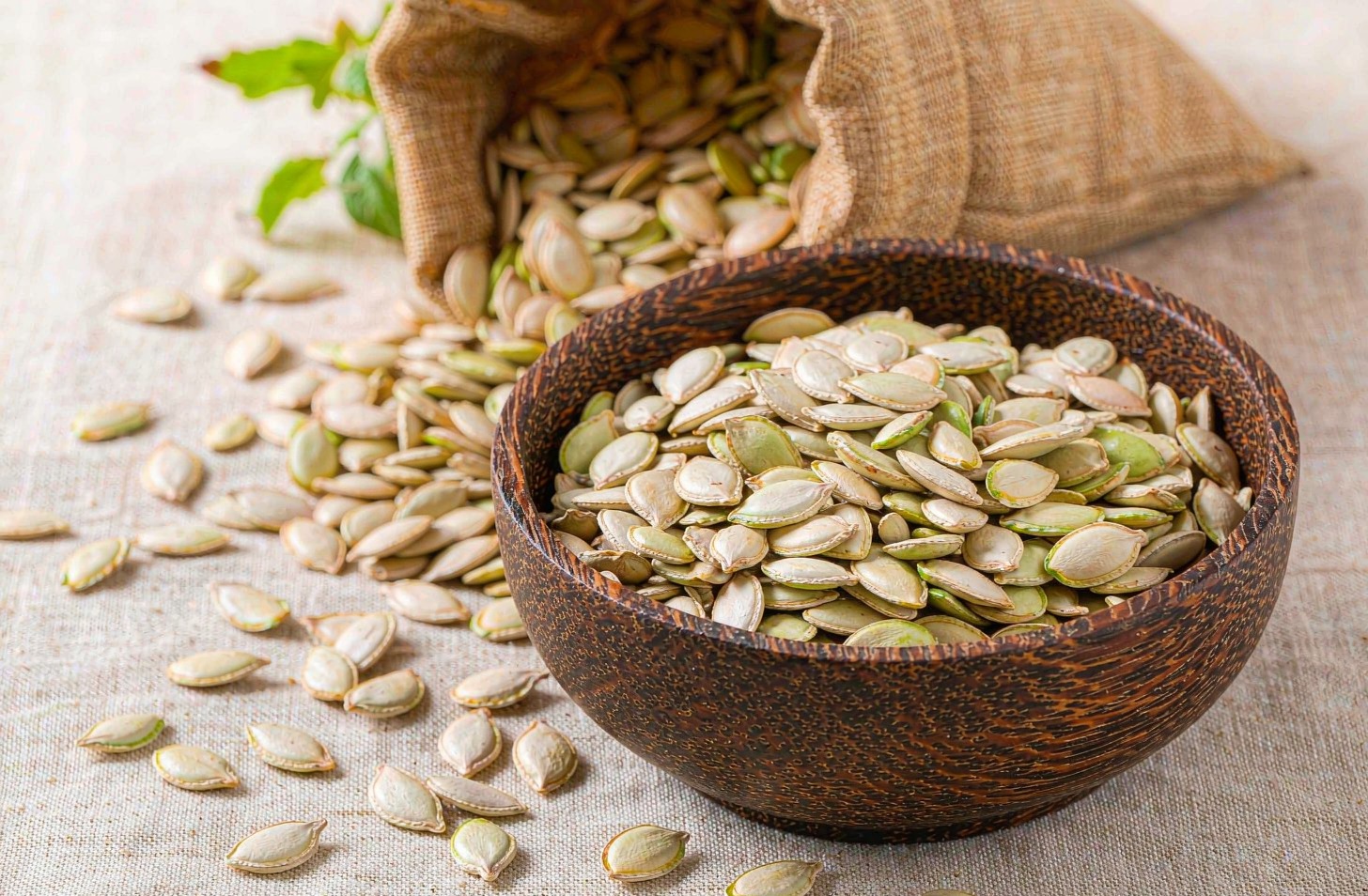
Hulled Pumpkin Seeds Supplier China: A Complete Buyer’s Guide
Choosing a reliable hulled pumpkin seeds supplier from China means verifying hulling capability, kernel purity, color consistency, and export-grade food safety documentation. Hulled pumpkin seeds — also known as pepitas or pumpkin seed kernels — are one of the fastest-growing ingredients in the global snack, bakery, and health-food industries. China is the world’s largest producer and exporter of pumpkin seeds, and suppliers in Inner Mongolia dominate the hulled segment thanks to integrated hulling, cleaning, and color-sorting lines. This guide explains what importers should look for when sourcing hulled pumpkin seeds in bulk from China.
Whether you are a food manufacturer, private-label brand, or wholesale distributor buying AAA, AA, or A grade hulled pumpkin seeds for Europe, North America, the Middle East, or Asia, the sourcing criteria below will help you lock in consistent quality and on-time delivery.
What Are Hulled Pumpkin Seeds (Pepitas)?
Hulled pumpkin seeds are the edible kernels left after the hard white outer shell is removed. In North and South American markets they are commonly called pepitas; in European and Asian trade documents they are usually listed as pumpkin seed kernels or hulled pumpkin seeds. The main commercial varieties sourced from China are:
- Shine Skin kernels — light green, glossy appearance, popular in snack and confectionery;
- GWS (Grown Without Shell) kernels — snow-white, thin-skinned, premium grade for bakery and health food;
- Snow White kernels — bright ivory color, preferred by European and Japanese buyers for visual uniformity.
Each variety has different flavor profiles, oil content, and price points, so matching the right kernel type to your end product is the first step in sourcing.
Why Source Hulled Pumpkin Seeds from China
China accounts for a significant share of global pumpkin seed production, with Inner Mongolia, Xinjiang, and Heilongjiang as the primary growing belts. Chinese hulled pumpkin seed suppliers offer several competitive advantages:
- Integrated hulling infrastructure — modern hulling lines with dehullers, separators, and aspirators produce clean kernels at scale;
- Lower farm-gate costs — large-scale cultivation and government-supported agricultural programs keep raw material prices competitive;
- Variety concentration — Shine Skin, GWS, and Snow White seeds are all processed in the same region, making mixed-container orders efficient;
- Established export logistics — direct rail and port links from Inner Mongolia to Tianjin and Dalian reduce inland transit time.
The key risk for importers is not origin capacity but batch-to-batch consistency: hulling yield, broken-kernel rate, and color uniformity can vary significantly between suppliers. A factory audit and pre-shipment inspection are essential safeguards.
How Hulled Pumpkin Seeds Are Processed in China
Understanding the hulling workflow helps buyers evaluate whether a supplier truly controls quality or simply resells traders’ stock.
Hulling and Shell Separation
Raw pumpkin seeds with shells are fed through mechanical dehullers that crack the hard outer shell without damaging the kernel. A combination of vibration sieves, gravity separators, and air aspirators then removes shell fragments and light debris. The best suppliers run double-pass hulling to maximize yield and minimize residual shell content.
Cleaning and Grading
After hulling, kernels pass through multi-layer sieve graders that sort by size — typically measured in millimeters or seeds per 100 g. Common export sizes are 9–10 mm, 10–11 mm, and 11 mm up. Uniform sizing matters for roasting consistency and automated packing lines.
Color Sorting and Final Inspection
High-speed optical color sorters detect and eject dark, yellow, or damaged kernels. Premium suppliers supplement machine sorting with hand-picking stations for AAA and AA grades. Metal detection and moisture testing are the final steps before vacuum packing or bulk bagging.
Key Specifications for Hulled Pumpkin Seeds
| Parameter | Standard Export Range |
|---|---|
| Purity (kernel content) | 99.5% – 99.95% |
| Moisture | ≤ 7–8% |
| Broken kernels | ≤ 2–5% (grade dependent) |
| Admixture (shell, foreign matter) | ≤ 0.05–0.5% |
| Size (Shine Skin / GWS) | 9–10 mm, 10–11 mm, 11+ mm |
| Color | Light green (Shine Skin) / snow white (GWS) |
| Packing | 25 kg vacuum PP bags, 12.5 kg retail cartons, or custom |
| Shelf life | 12 months in cool, dry storage |
Grades and Quality Standards
AAA / AA / A Grade Breakdown
| Grade | Color | Purity | Broken Rate | Best For |
|---|---|---|---|---|
| AAA | Uniform, no discoloration | ≥ 99.9% | ≤ 2% | Premium snacks, retail packs, confectionery |
| AA | Good, minimal variation | ≥ 99.7% | ≤ 3% | Standard retail, granola, trail mix |
| A | Acceptable, some color variance | ≥ 99.5% | ≤ 5% | Further processing, oil pressing, bakery fillings |
Purity and Color Requirements
European buyers often reference EC 1881/2006 for aflatoxin limits and EU Regulation 396/2005 for pesticide residues. Japanese importers typically require positive release certificates with each lot. A competent hulled pumpkin seeds supplier should be able to quote maximum residue limits (MRLs) for your target market and provide third-party lab reports from SGS, Bureau Veritas, or Intertek on request.
How to Choose a Reliable Hulled Pumpkin Seeds Supplier
Certifications to Verify
- HACCP / ISO 22000 — food-safety management;
- ISO 9001 — quality management system;
- HALAL and Kosher — required for Middle East, Southeast Asia, and Jewish-market distribution;
- BRC / IFS — increasingly mandatory for European retail supply chains;
- Organic certification (EU/USDA) — if you serve the organic segment.
Processing Capability
Ask specifically about hulling yield rates and daily kernel output. A supplier with in-house hulling can typically guarantee better purity and faster turnaround than a broker. Request a short video tour of the hulling, sorting, and packing lines, and confirm whether processing is done at their own facility or subcontracted.
Export Documentation Support
Reliable exporters prepare the full document package: commercial invoice, packing list, bill of lading, certificate of origin, phytosanitary certificate, and any market-specific health certificates. For hulled pumpkin seeds, some destinations also require a processed-food sanitary certificate because the hulling step is classified as processing rather than raw agricultural export.
Packaging, MOQ, and Shipping
- Trial orders — 500 kg to 1 ton, often shipped by LCL or air freight for quality confirmation;
- Container orders — 12–14 tons (20 ft) or 24–26 tons (40 ft HQ), depending on bag weight and pallet stacking;
- Standard packing — 25 kg vacuum-sealed PP woven bags with inner PE liner;
- Custom packing — 12.5 kg retail cartons, 1 kg stand-up pouches, or private-label printed bags (MOQ usually 1–2 tons per SKU);
- Payment terms — 30% deposit + 70% against B/L copy for repeat orders; L/C at sight for first-time buyers above $20,000.
Container loading should include moisture-absorbent pads and stable pallet configuration to prevent bag rupture during ocean transit. FOB Tianjin or Dalian are the most common Incoterms for Inner Mongolia-based suppliers.
Applications in Food Manufacturing
Hulled pumpkin seeds are versatile ingredients across multiple food categories:
- Snack industry — roasted and flavored pepitas in retail packs;
- Bakery — toppings for artisan bread, rolls, and pastries;
- Confectionery — inclusion in chocolate bars, brittles, and energy balls;
- Breakfast cereals and granola — adds crunch and plant-based protein;
- Plant-based meat and dairy alternatives — used for texture and nutritional fortification;
- Oil pressing — cold-pressed pumpkin seed oil for gourmet and cosmetic markets.
Each application demands different kernel specifications — size, roast stability, oil content, and microbiological limits — so communicating your end use to the supplier early ensures the right grade is quoted.
Frequently Asked Questions
What is the difference between hulled pumpkin seeds and pepitas?
There is no botanical difference. Pepitas is the Spanish-derived term commonly used in the Americas, while hulled pumpkin seeds or pumpkin seed kernels are the standard trade names in Europe and Asia. Both refer to the edible kernel after the outer shell is removed.
Which grade of hulled pumpkin seeds should I buy for retail packing?
For retail snack packs and premium consumer products, choose AAA grade with 99.9% purity, uniform light-green or snow-white color, and broken kernel rate below 2%. AA grade is acceptable for standard retail granola and trail mixes.
How do I verify the hulling purity of a supplier’s kernels?
Request a pre-shipment sample of at least 500 g and visually inspect for residual shell fragments, discoloration, and broken pieces. For large orders, book third-party inspection (SGS or Bureau Veritas) to verify purity, moisture, and aflatoxin levels against the contract specification.
What is the typical shelf life of hulled pumpkin seeds?
When packed in vacuum bags with moisture below 8% and stored below 15°C, hulled pumpkin seeds retain quality for 12 months. High-oil varieties like Shine Skin may begin to oxidize after 9–10 months in warm climates, so refrigerated storage is recommended for long holding periods.
Can I order mixed varieties in one container?
Yes. Most large suppliers in Inner Mongolia can load Shine Skin, GWS, and Snow White kernels in the same container, provided each variety is separately palletized and labeled. Mixed-container MOQ typically starts at one 20 ft container (12–14 tons total).
Do hulled pumpkin seeds require different import documentation than in-shell seeds?
In some markets, yes. Because hulling is classified as processing, importers may need a processed-food sanitary certificate in addition to the standard phytosanitary certificate. Your supplier should confirm the exact document list for your destination country before the first shipment.
Conclusion
Sourcing hulled pumpkin seeds from China is straightforward when you know what to verify: hulling capability, kernel purity, grade consistency, and export documentation. Start by confirming certifications and processing infrastructure, lock specifications into a written contract, test with samples and a trial order, and always book third-party inspection before the first full container.
If you are looking for a reliable hulled pumpkin seeds supplier in China, Ouji International supplies AAA, AA, and A grade pumpkin seed kernels from our integrated processing plants in Inner Mongolia. We handle hulling, color sorting, vacuum packing, and full export documentation for buyers in Europe, North America, the Middle East, and Asia. Contact us for samples, current specifications, and competitive bulk pricing.