

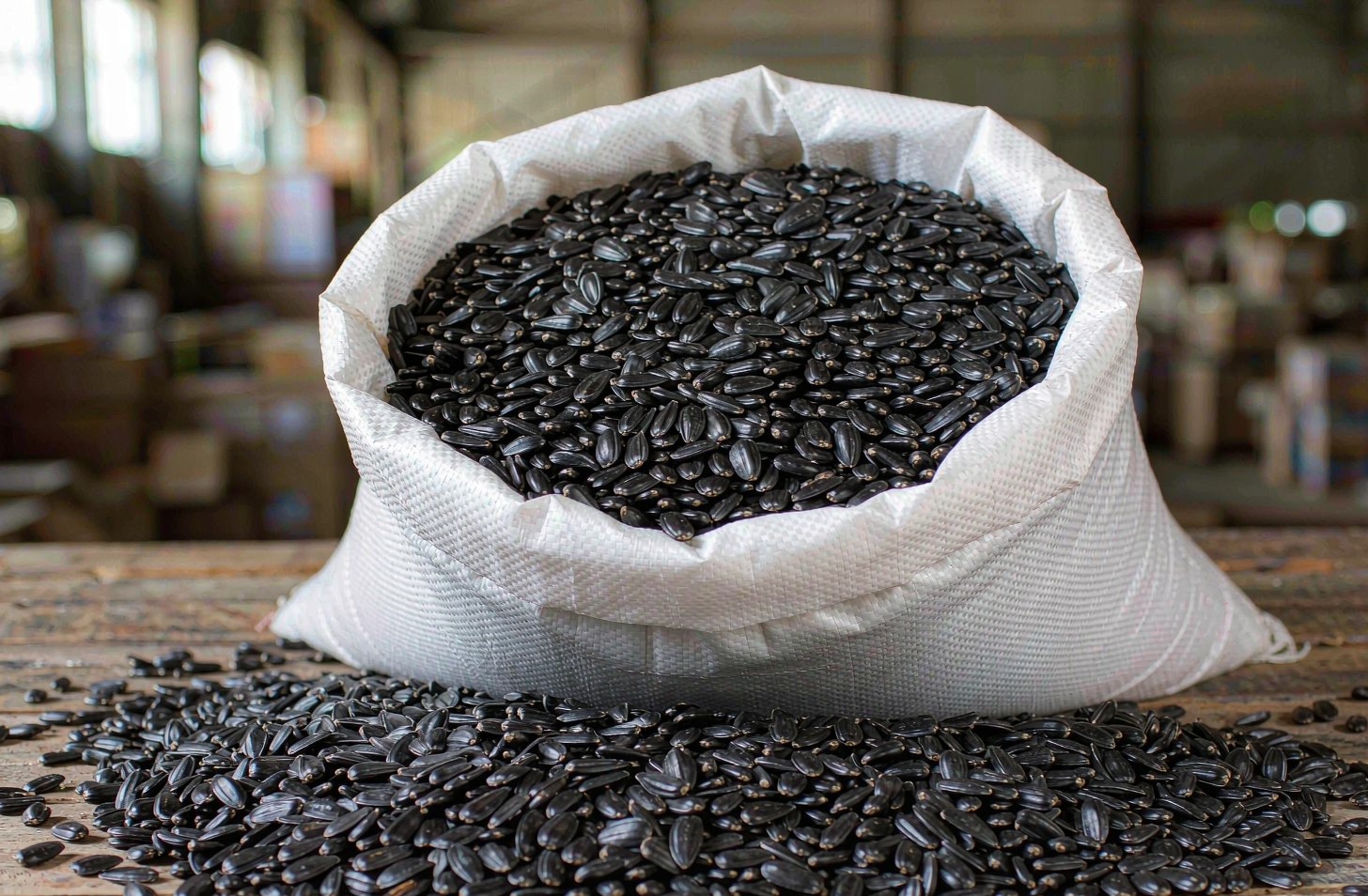
Black Sunflower Seeds Supplier China: Specs & Buyer Guide
Black sunflower seeds — the dark-hulled, high-kernel-yield varieties grown mainly in Inner Mongolia — are one of the most requested raw materials in the global snack, kernel-processing, and bird-food industries. Sourcing them from China makes sense: China is among the world’s largest sunflower seed producers and exporters, and Inner Mongolia’s dry climate, long sunshine hours, and large day–night temperature differences produce seeds with thick kernels, consistent size, and low moisture. This guide explains what black sunflower seeds actually are, how they differ from striped and white varieties, which specifications to demand from a supplier, and how to verify quality before you commit to a container order.
If you are a wholesale buyer, snack brand, shelling plant, or trading company sourcing black sunflower seeds in bulk for Europe, the Middle East, North Africa, or the Americas, the checklist below applies whether you are placing a first 1-ton trial or negotiating a 12-month supply contract.
What Are Black Sunflower Seeds?
Black sunflower seeds are oil-type sunflower varieties with a solid black hull, as opposed to the grey-striped confectionery types (such as 361 or 363) or the whitish 5009 type. In the Chinese export trade they are often referred to as black seeds (黑葵花籽) or oil sunflower seeds. Their commercial value comes from three properties:
- High kernel-to-hull ratio — shelling plants recover more edible kernel per ton than from striped types;
- Rich oil content — typically 40% or more in the kernel, making them the base material for sunflower oil pressing and for roasted-seed products;
- Uniform dark appearance — prized for roasting, seasoning lines, and premium bird-food blends where a clean, consistent look matters.
Black vs. Striped vs. White: A Quick Comparison
Buyers frequently confuse the three main sunflower seed categories shipped from China. The table below summarizes the practical differences:
| Attribute | Black (Oil-type) | Striped (361/363 confectionery) | White (5009 type) |
|---|---|---|---|
| Hull color | Solid black | Black-and-grey stripes | Light / whitish |
| Typical use | Kernel shelling, oil pressing, roasting, bird food | In-shell roasted snacks | Premium in-shell snacks, bakery |
| Kernel yield | High | Medium | Medium |
| Oil content | 40%+ (kernel) | Lower | Lower |
| Common size grades | 24/28, 28/32, 32/38 seeds per ounce | 20/30, 24/28, 28/32 per ounce | 24/28, 26/28, 28/30 per ounce |
Confirm the variety in writing before sampling — mixing up oil-type and confectionery types is the single most common quality dispute in this category.
Why Source Black Sunflower Seeds from China
China’s sunflower belt runs through Inner Mongolia, Xinjiang, and Gansu, and Inner Mongolia alone accounts for a major share of national output. For overseas buyers, a capable Chinese supplier offers:
- Scale and stable supply — large contracted farm areas and modern warehouses mean volume orders can be filled across the season, not just at harvest;
- Competitive FOB pricing — especially for bulk 25/50 kg pp-bag shipments;
- Mature processing — automatic cleaning, size grading, color sorting, de-stoning, and metal detection lines are standard in export-oriented plants;
- Flexible packing — bulk bags, vacuum packs, or private-label retail packaging.
Since 2013, Ouji International, based in Hohhot, Inner Mongolia, has exported sunflower seeds, kernels, pumpkin seeds, and other nuts to Europe, the Middle East, Japan, Korea, and the Americas, operating two processing plants with six automatic production lines — the kind of integrated setup that keeps quality consistent between batches.
Key Specifications to Demand from a Supplier
Put these numbers in the contract, not just the proforma invoice:
Physical Specifications
| Parameter | Typical Export Standard | Why It Matters |
|---|---|---|
| Purity | ≥ 99.0% – 99.5% | Fewer broken, shriveled, or foreign seeds per lot |
| Moisture | ≤ 9.0% | Prevents mold growth and aflatoxin risk in transit |
| Admixture / impurities | ≤ 0.5% | Stones, stems, and other seeds must be removed |
| Imperfect / broken kernels | ≤ 2% (in-shell: broken & blank seeds) | Directly affects shelling yield and roast appearance |
| Size grading | Per ounce (e.g., 24/28, 28/32) | Uniform roasting and packaging on automated lines |
| Aflatoxin & pesticide residue | Per EU 1881/2006 or importing-country limits | Border-rejection risk if untested |
Food-Safety Certification
At minimum, expect a certified supplier to hold HACCP or ISO 22000 food-safety management certification, and — for Middle East and Jewish-market customers — HALAL and Kosher certificates. European retail chains increasingly require BRC or IFS as well. Always check the certificate’s issuing body, scope, and validity date, and confirm the scope covers the actual processing plant rather than only the head office.
How to Vet a Black Sunflower Seeds Supplier: 5 Steps
1. Verify Origin and Variety in Writing
Ask which region the current crop comes from and which variety it is. A professional supplier will state the growing region, harvest year, and variety code without hesitation — and will match pre-shipment samples to that declaration.
2. Audit Processing Capability
Ideally the supplier owns its cleaning and grading lines. Key equipment to confirm:
- Sieve size-grading lines (consistent per-ounce grading);
- Color sorters to remove discolored and moldy seeds;
- De-stoners and metal detectors — non-negotiable for edible exports;
- Moisture-controlled warehouses for off-season stock.
Plants that clean, grade, and pack under one roof give you far more batch-to-batch consistency than traders reselling from multiple mills.
3. Insist on Third-Party Pre-Shipment Inspection
Before loading, request an SGS, Bureau Veritas, or Intertek inspection covering purity, moisture, and contamination — or at least a detailed in-house COA (Certificate of Analysis). For EU-bound lots, aflatoxin and pesticide-residue testing against EU limits is essential; the EU RASFF portal publishes rejections every month, and most trace back to untested lots.
4. Run a Trial Order First
Sequence every new supplier relationship the same way: sample → small trial lot (1–5 tons) → third-party check on arrival → container order. Judge the delivered lot against the pre-shipment sample and the COA, not against photos or the quotation.
5. Check Export Documentation Competence
A mature exporter prepares the complete document set: commercial invoice, packing list, certificate of origin, phytosanitary certificate, fumigation certificate where required, and correct FOB/CIF/DDP quotations for your port. Slow or confused paperwork is a leading indicator of problems later.
Common Quality Pitfalls and How to Avoid Them
- Variety substitution — cheaper striped or mixed lots shipped as black seeds. Prevent with pre-shipment samples retained by both parties.
- High moisture for weight gain — seeds above 9.5% moisture can mold in transit. Always test moisture on arrival against the COA.
- Aflatoxin findings at EU/ME borders — caused by poor drying and storage. Work only with suppliers who test every lot, not occasionally.
- Inconsistent size grading — mixes that jam roasting and packing lines. Specify per-ounce grading and reject out-of-spec lots.
- Old-crop sold as new-crop — ask for the harvest year explicitly and confirm storage conditions.
For current crop availability, specification sheets, and FOB quotes, you can request a quotation directly from Ouji International — samples are available before any commitment.
Packing, Loading, and Shipping
Standard export configurations for bulk black sunflower seeds:
- 25 kg or 50 kg woven PP bags — the default for shelling plants and oil pressers;
- Vacuum or nitrogen-flushed packs — for longer shelf life in hot climates;
- Jumbo bags (500–1000 kg) — for industrial processors;
- Loading volume: a 20 ft container carries roughly 17–19 metric tons bagged; a 40 ft high-cube about 25–27 tons.
Recommended incoterms: FOB Qingdao or Tianjin for buyers with their own forwarders, CIF for door-to-port convenience. Storage at destination: keep below 60% relative humidity and away from direct heat to protect kernel oil quality.
Conclusion: Choose the Supplier, Not Just the Seed
Black sunflower seeds are a high-yield, high-margin raw material — but only when the supplier behind them can prove variety authenticity, consistent grading, and food-safety compliance. Shortlist suppliers who own their processing lines, welcome third-party inspection, and answer specification questions with numbers instead of adjectives. Then de-risk the relationship with a small trial order before scaling up.
Ready to source? Contact Ouji International for the current Inner Mongolia crop, detailed spec sheets, and competitive bulk pricing from an exporter with over a decade of experience shipping to Europe, the Middle East, and the Americas.
FAQ: Black Sunflower Seeds Sourcing
What is the MOQ for black sunflower seeds from China?
Most exporters quote a minimum of 1 full 20 ft container (about 17–19 tons). Some, including Ouji International, can support smaller trial orders of 1–5 tons so buyers can verify quality first.
What is the difference between black and striped sunflower seeds?
Black seeds are oil-type varieties with a solid black hull, higher kernel yield, and 40%+ kernel oil content — used for shelling, oil pressing, and roasting. Striped seeds (361/363) are confectionery types sold mainly as in-shell roasted snacks.
What purity and moisture standards should I expect?
Typical export standards are 99.0–99.5% purity, moisture ≤ 9%, and admixture ≤ 0.5%. State the exact figures in your contract and verify them via pre-shipment inspection.
Which certifications should a supplier have?
At minimum HACCP or ISO 22000; HALAL for Middle East buyers, Kosher where relevant, and BRC or IFS for European retail supply chains.
How are black sunflower seeds packed for export?
Standard packing is 25 kg or 50 kg PP bags, with vacuum packs and jumbo bags available. A 20 ft container loads roughly 17–19 tons.