

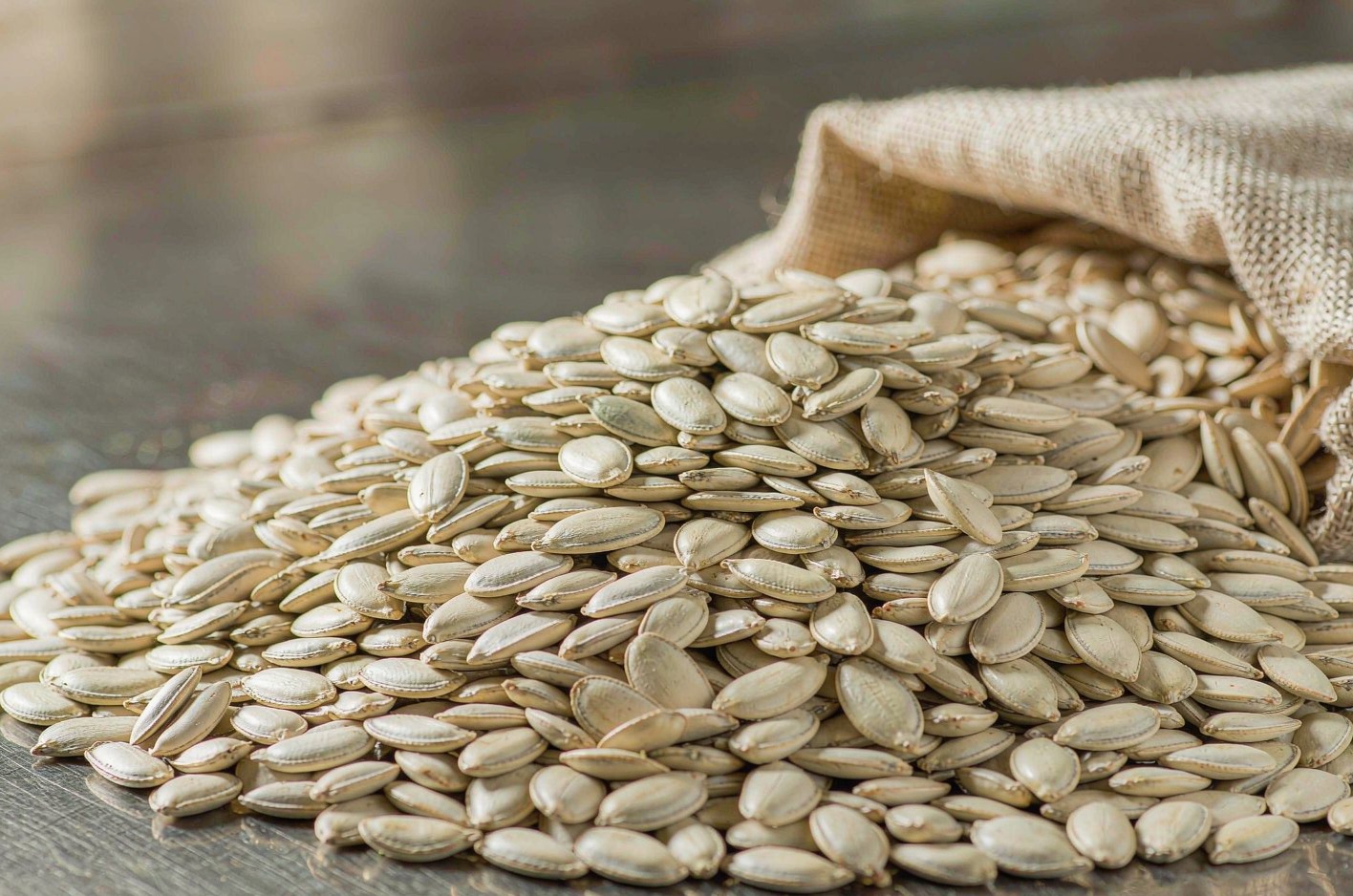
Why Do Sunflower Kernel Prices Fluctuate? A Buyer’s Guide
Sunflower kernel prices fluctuate because the kernel is a processed derivative of a seasonal, geographically concentrated oilseed crop, sold into continuous global demand. Three markets set the price at once: the raw seed harvest in the Black Sea region and China, the sunflower oil complex that competes with soy and palm, and the currency, freight and policy layer between the factory gate and your port. When any one of them moves, your quotation moves within two to four weeks. This guide explains the mechanics, shows which signals lead a price change, and gives importers practical ways to buy through the cycle instead of being caught by it.
This guide is for wholesale importers, food manufacturers, bakery and snack producers, and trading companies buying hulled sunflower kernels by the container from China.
Three Markets, One Price Tag
A kernel price is not one market’s opinion. It is four stacked layers, each running on a different clock.
| Price layer | What sets it | How fast it reaches your quote |
|---|---|---|
| Raw seed (farm gate) | Harvest size, quality, farmer selling pace, local trade competition | 2–8 weeks |
| Crush / oil complex | Sunflower oil versus soy and palm oil, crush margin, meal value | 1–6 weeks |
| Kernel processing | Seed-to-kernel yield, grading recovery, labour, energy, packing | Immediate (cost basis) |
| Logistics, FX and policy | Ocean freight, container availability, USD/CNY, export rebates, tariffs | 1–4 weeks |
The key consequence: the kernel market is a residual market. Seed goes first to the crusher when oil margins are good, because crushers can pay for oil content a kernel processor cannot use. When oil rallies, seed is bid away, kernel plants compete for a smaller pool, and kernel offers tighten within weeks. That mechanism explains more short-term volatility than any other factor.
The Annual Cycle: When Prices Usually Move
Sunflower is an annual crop with two dominant export origins. China’s crop is planted in April and May across Inner Mongolia, Xinjiang and Gansu and harvested from late August to October. The Black Sea crop (Ukraine, Russia, Romania, Bulgaria) is harvested from July to September. Both land in the same half of the year, so the market breathes on a predictable rhythm, though the size of each breath is not predictable.
| Quarter | Market phase | Typical price behaviour | What smart buyers do |
|---|---|---|---|
| Q1 | Old-crop tightness, farmer stocks declining | Firm to rising; high grades get scarce | Cover nearby shipments early; verify supplier stock |
| Q2 | Planting intentions, Black Sea weather premium | Most volatile quarter; fast spikes and fast retreats | Stagger purchases in small lots; do not chase a spike |
| Q3 | Black Sea harvest, first quality results | Falls on harvest pressure, then speculates on quality | Negotiate new-crop volumes; book container space early |
| Q4 | Chinese new crop, peak processing throughput | Seasonal low to soft; quality spread widest | Build inventory for Q1–Q2; lock freight separately |
Treat this as a pattern, not a rule. Two short crops, an export restriction or a freight shock will override seasonality completely. The cycle tells you when the market is usually comfortable, not when it will be cheap.
Seven Drivers That Actually Move the Number
1. Harvest Size and Quality in Two Origins
Exportable sunflower surplus is concentrated in a handful of countries, and there is no large carryover stock to absorb a shortfall. A 10% swing in the Black Sea crop is enough to reprice the world market. Quality matters as much as volume: a wet harvest or early frost produces more damaged and high-moisture seed, shrinking the share that can become premium kernel grades.
2. Seed-to-Kernel Yield
Hulled kernel is only 40–48% of seed weight for confectionary types, depending on variety, size and moisture. If usable yield drops three points because the crop is thin, cost per tonne of kernel rises roughly 7% even with no change in seed price. Buyers who track only seed prices miss half the story.
3. The Oil Market’s Pull on Raw Seed
Sunflower oil competes with soy, rapeseed and palm oil. When vegetable oil rises, crushers can pay more for seed and still make margin, so seed is diverted to crushing and kernel supply tightens. That is why a palm oil policy change in Southeast Asia can move a kernel quote in Hohhot.
4. Currency, Export Policy and Duty
Kernels trade in US dollars, are produced with costs in renminbi, hryvnia or rubles, and land in markets with their own tariffs. A 3% move in USD/CNY is a 3% move in the exporter’s margin and shows up in the next quotation round. Export rebate changes, phytosanitary rules or destination duties can shift the effective price more than a harvest surprise.
5. Freight, Containers and Route Risk
Ocean freight can be 10–18% of landed cost in a tight market. Container availability, peak-season surcharges and route changes all feed into CIF numbers. It is also the one cost line you can partly control, by fixing freight separately and booking space earlier.
6. Specification Drift and the Quality Spread
In a tight market average quality falls and the gap between grades widens. Purity, moisture, admixture, broken and shrivelled kernels, and colour all carry a price. A buyer who contracts “sunflower kernel, 99%” without moisture, defect and screen limits will receive whatever clears that loose description, at a premium grade price.
7. Buyer Behaviour: Panic Buying and Destocking
Demand from bakery, snack and tahini producers is fairly stable. Inventory behaviour is not. When prices rise, importers buy forward and amplify the rise; when they fall, buyers stop and amplify the fall. In a thin market this herding drives much of a short-term swing, and it is why spikes overshoot.
Why Kernels Swing More Than Raw Seeds
Hulled kernels are a thinner market than seed. Fewer plants can deliver consistent colour sorting and metal detection, storage life is shorter because of oil content and rancidity risk, and buyers cannot easily substitute whole seed in a recipe. With no meaningful buffer stock in the chain, a 10% move in seed can become a 15% move in kernel. That leverage cuts both ways, which is why buyers who wait for the perfect moment often pay more than buyers who buy in tranches.
How Volatility Appears in a Quotation
The price is only half of a quotation. The other half is how long it is valid and who carries risk while it is valid.
| Quotation structure | Typical validity | Who carries price risk | Best used when |
|---|---|---|---|
| Firm FOB offer | 3–7 days | Supplier | Market falling or stable; you can decide fast |
| Fixed CIF offer | 7–15 days | Supplier, including freight | You want one landed number and no freight exposure |
| Price-to-be-fixed | Shipment window | Buyer, until fixed | You want volume secured and a view on direction |
| Escalation clause | Contract term | Shared, by formula | Long programs where neither side wants a flat bet |
| Annual frame, quarterly pricing | 12 months volume | Split by quarter | Industrial users needing supply security over lowest price |
A supplier offering a 30-day firm price in a fast-rising market is either absorbing risk deliberately, planning to renegotiate, or quoting a specification they cannot ship. All three are worth asking about before you sign.
Signals Worth Watching Every Week
- FAO Food Price Index, oils sub-index — the cleanest monthly read on whether crushing is pulling seed away from kernel plants: FAO Food Price Index.
- USDA oilseed production estimates — monthly and annual reports reset the supply picture for the Black Sea and EU: USDA Foreign Agricultural Service.
- Black Sea sunflower oil FOB offers — shows what crushers can afford to pay for seed.
- China customs export volumes for sunflower seeds and kernels — shows whether supply is concentrated in one destination.
- USD/CNY and a container freight index — two cost lines that move independently of the crop.
- Weather in July and August — Black Sea heat during flowering and rain at Inner Mongolia harvest are the two most price-sensitive windows.
Procurement Tactics That Survive the Cycle
- Buy the specification, not the headline price. Fix purity, moisture, admixture, defect tolerance, screen size, packaging and microbiological limits in writing.
- Split the year into three or four pricing windows. Tranches of 25–35% remove the risk of buying the top of a spike.
- Read validity as a signal. Short validity in a quiet market is normal; long validity in a rising market deserves a second look.
- Separate product and freight. A fixed FOB price plus independently tendered freight usually beats a bundled CIF number.
- Hold six to eight weeks of safety stock, not three months — enough to survive a delay, not so much that you are financing a bet.
- Qualify a second supplier before you need one, to protect against both price and single-source failure.
- Contract the yield, not just the tonnage. Agree how over-delivery, under-delivery and grade substitution are handled.
Red Flags in a Volatile Market
- A quote far below market with long validity — usually a spec that will not be met or a lot that does not exist;
- Contract language allowing a price adjustment after signature without a published formula;
- Vague quality parameters such as “99% purity” with no moisture or defect limits;
- No traceability from lot to plant to processing date;
- Certificates offered as images without a certifying body, scope and expiry date you can verify.
How Ouji International Manages Price Risk
Ouji International has exported nuts and seeds from Hohhot, Inner Mongolia since 2013. We run two processing plants with six automatic production lines covering cleaning, grading, colour sorting, metal detection and packing, and we ship walnuts, walnut kernels, pecans, cashews, pumpkin seeds and sunflower kernels to Europe, the United States, Japan and Korea, the Middle East, North Africa and South America.
Because we buy from the same crop the market is pricing, our quotations are built on the actual lot specification and actual seed cost rather than a spot index. Every offer carries a clear validity window, FOB and CIF are quoted separately so you can see the freight component, and volume buyers can fix part of a program and leave part open. Review current ranges on our products page, or send your specification and volume through our contact form for a lot-specific quote.
Frequently Asked Questions
What causes sunflower kernel prices to rise quickly?
Usually a supply shock rather than a demand surge: a smaller Black Sea harvest, a processing yield loss, or seed being pulled toward crushing because oil prices are high. Currency and freight can add to it within weeks.
What time of year are sunflower kernel prices lowest?
Typically October to December, when Chinese and Black Sea crops are both being processed. This is a seasonal tendency, not a guarantee, and a short crop or export restriction will override it.
Why is kernel price higher than seed price?
Because only 40–48% of seed weight becomes usable kernel. The kernel must carry the cost of the whole seed plus hulling, colour sorting, grading, metal detection and packing.
Do sunflower kernel prices follow sunflower oil prices?
Partly. The link is indirect: crushers competing for the same seed set the floor for seed cost. Strong oil pulls seed into crushing, tightens kernel supply and pushes kernel prices up.
How long is a typical sunflower kernel quotation valid?
FOB China offers are usually valid three to seven days; CIF offers seven to fifteen days. Longer validity in a rising market normally carries a risk buffer in the price.
Can I fix a price for next season’s crop?
Rarely at a flat price. Most exporters agree a volume frame with quarterly or shipment-window pricing, or a formula linked to seed cost, because a flat forward price on an unharvested crop is a credit risk on both sides.
How much do specifications affect the price?
Significantly. Purity, moisture, defect count, screen size and colour grade can create a 5–15% spread between lots of the same origin in the same week.
Conclusion: Buy the Cycle, Not the Headline
Sunflower kernel prices move because a seasonal, concentrated crop meets continuous demand through a thin processing market, with oil, currency and freight layered on top. No buyer can remove that volatility, but every buyer can stop being surprised by it: know which price layer is moving, buy in tranches against a tightly written specification, keep a second qualified supplier, and treat quotation validity as information rather than small print.
If you are planning 2026 volumes and want a lot-specific quote with a defined validity window, send us your specification and shipment schedule. We will come back with FOB and CIF numbers, the grade you are actually buying, and a straight answer on what the market is doing.