

China Food Ingredient Supplier: A Complete Sourcing Guide
Finding the right China food ingredient supplier means looking beyond price to verify food safety, export capability, and consistent quality. China is one of the world’s largest producers of nuts, seeds, and plant-based food ingredients, with deep supply chains in regions like Inner Mongolia, Xinjiang, and Gansu. For B2B buyers — food manufacturers, wholesalers, trading companies, and private-label brands — a reliable supplier can lower procurement risk, speed up customs clearance, and protect product quality across every container.
This guide explains what a professional China food ingredient supplier should offer, how to vet one, and what Ouji International delivers for buyers sourcing walnuts, pumpkin seeds, sunflower seeds, kernels, and other agricultural ingredients in bulk.
Why Source Food Ingredients from China
China’s food ingredient sector benefits from scale, vertical integration, and decades of export experience. Buyers commonly choose Chinese suppliers for four reasons:
- Large production volumes — China leads global output of walnuts, pumpkin seeds, sunflower seeds, and many dried agricultural commodities;
- Competitive unit costs — integrated farming, processing, and packing keep margins reasonable without sacrificing traceability;
- Wide product range — one supplier can often cover multiple ingredients (nuts, kernels, seeds) from a single origin region;
- Modern processing infrastructure — automatic cleaning, color sorting, metal detection, and vacuum packing are now standard in mid-to-large export plants.
The main risk is supplier inconsistency: certificates that do not match the plant, grades that change between batches, or paperwork delays at port. A structured vetting process eliminates most of these problems before the first order.
What Defines a Reliable China Food Ingredient Supplier
1. Food-Safety Certifications Aligned with Your Market
A serious supplier should provide current, verifiable certificates on request. The most common requirements for food ingredient importers include:
- HACCP / ISO 22000 — food-safety management systems;
- ISO 9001 — quality management;
- HALAL and Kosher — essential for Middle East, Southeast Asia, and Jewish-market channels;
- BRC, IFS, or organic certificates — increasingly required by European retailers and clean-label brands.
Always confirm the certificate scope, validity date, and issuing body. A trustworthy supplier will send copies without hesitation and explain which plant or product each certificate covers.
2. Integrated Processing and Quality Control
Food ingredient quality is made in the factory, not in the sales deck. Look for suppliers that control the full flow from raw material intake to packed container:
- Raw material screening — moisture, mold, and foreign-matter checks on arrival;
- Automatic cleaning and grading — sieving, gravity separation, and color sorting;
- Metal detection and X-ray — critical for food-grade exports;
- Hand-picking or optical final inspection — needed for premium grades;
- Vacuum or nitrogen packing — extends shelf life during ocean freight.
Plants that combine farming partnerships, processing lines, and export logistics under one management team usually deliver more consistent lots than brokers who resell from multiple small mills.
3. Clear Product Specifications and Sampling
Professional suppliers document every parameter before quoting. A typical specification sheet for nuts or seeds should state:
- Variety, grade, and size range;
- Purity, admixture, and moisture limits;
- Packaging type, net weight, and marking;
- Shelf life and storage conditions;
- Certifications applicable to the lot.
Always request a pre-shipment sample that matches the exact lot you will receive, not a generic “representative” sample from a different batch.
4. Export Documentation and Regional Experience
International food trade depends on paperwork accuracy. A capable China food ingredient supplier should routinely prepare:
- Commercial invoice and packing list;
- Bill of lading or airway bill;
- Certificate of origin;
- Phytosanitary certificate;
- Certificate of analysis (when required);
- HALAL/Kosher or organic certificates for target markets.
Suppliers with repeat experience in your region already understand port preferences, label rules, and inspection expectations — which reduces customs surprises.
Key Food Ingredients from Ouji International
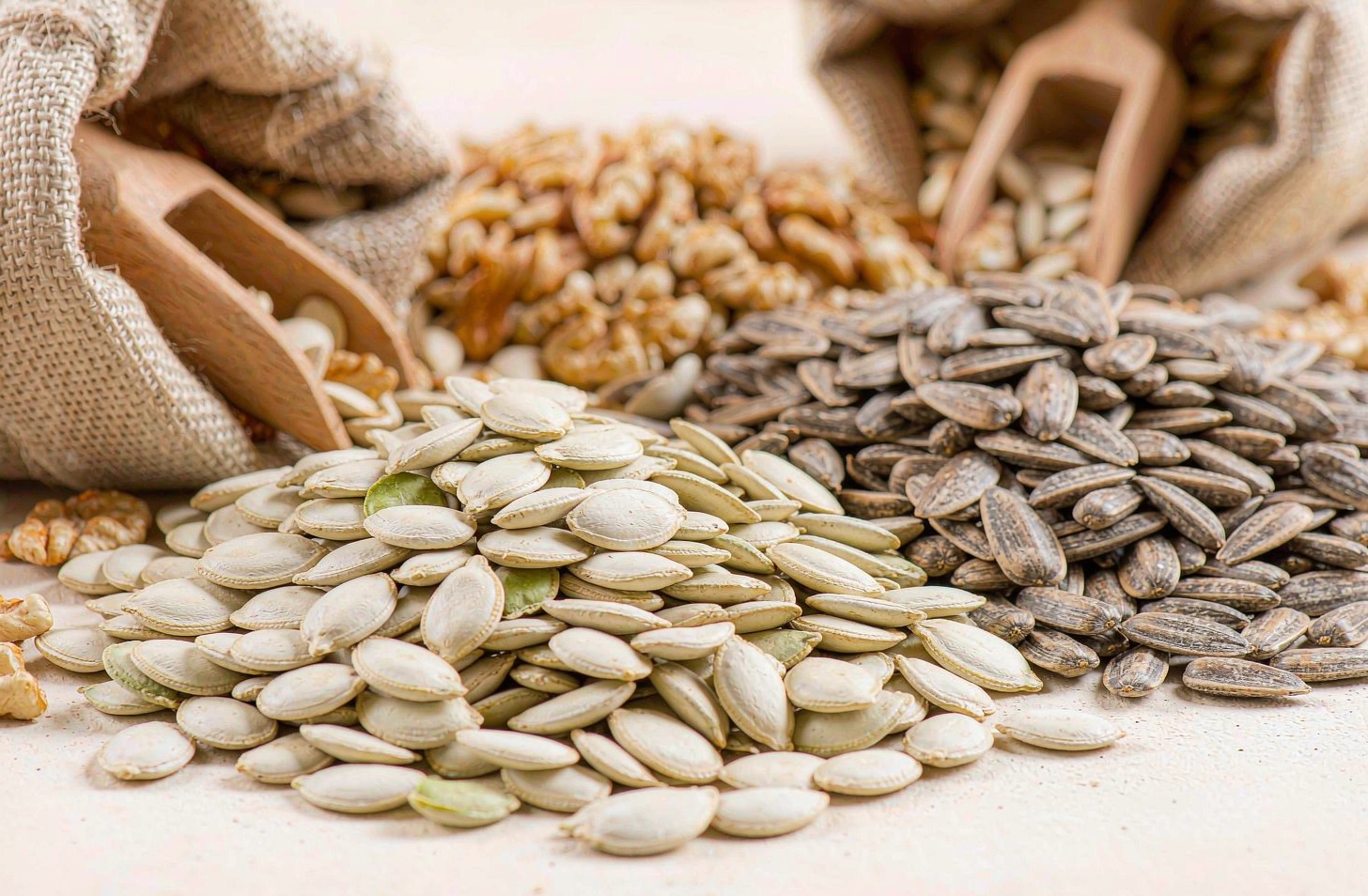
Ouji International is a Hohhot-based agricultural food exporter supplying B2B buyers with nuts, seeds, and kernels sourced from Inner Mongolia and surrounding production belts. The table below shows the main ingredient categories and typical uses.
| Ingredient | Common Forms | Typical Buyer Industries |
|---|---|---|
| Walnuts | In-shell, walnut kernels, halves, pieces | Bakery, snack, nut butter, retail |
| Pumpkin seeds | Shine Skin, GWS, Snow White, kernels | Snack, confectionery, cereal, oil |
| Sunflower seeds | In-shell, kernels, striped, black | Snack, bakery, bird feed, oil |
| Pecans | In-shell, shelled halves | Bakery, ice cream, premium snack |
| Cashews | Whole, splits, pieces | Snack, confectionery, food service |
All products can be packed in 25 kg or 50 kg PP bags, vacuum packs, or custom private-label retail formats depending on the buyer’s market.
How to Verify a China Food Ingredient Supplier in 5 Steps
- Check business registration and export license — confirm the legal entity name matches the contract and invoice;
- Review certificates for scope and validity — call or email the issuing body if anything looks unusual;
- Request a live or recorded factory tour — look for clean storage, automatic sorting lines, and traceability records;
- Order a trial shipment — test quality, packaging, documents, and lead time at small volume before scaling;
- Arrange third-party inspection — SGS, Bureau Veritas, or Intertek can verify weight, quality, and documents before loading.
Red Flags That Should Stop the Conversation
- Certificates are expired, blurry, or issued by unknown bodies;
- The supplier cannot name the processing plant city or show it on a map;
- Quotes are far below the market range with no explanation;
- They refuse samples, specification sheets, or third-party inspection;
- Payment terms demand 100% advance for a first order with no letter of credit or escrow option;
- The same product name covers visibly different grades between quotes.
Why Ouji International Works as a China Food Ingredient Supplier
Hohhot Ouji International Co., Ltd. has operated from Inner Mongolia since 2013, running 2 production processing plants with 6 automatic production lines. The company exports to Europe, the Americas, Japan and South Korea, the Middle East, North Africa, and South America, supplying food manufacturers, wholesalers, and trading companies with nuts, seeds, and kernels.
What buyers typically value when sourcing from Ouji:
- Origin proximity — Inner Mongolia and nearby regions are major Chinese production belts for sunflower seeds, pumpkin seeds, and walnuts;
- Controlled processing — cleaning, grading, color sorting, metal detection, and packing happen at integrated facilities;
- Export-ready documentation — certificates, phytosanitary documents, and third-party inspection support are handled in-house;
- Flexible packing — bulk industrial packs, retail vacuum packs, and private-label options;
- Cross-time-zone service — fast quotes, sampling, and after-sales support.
Frequently Asked Questions
What is a China food ingredient supplier?
A China food ingredient supplier is a company based in China that processes and exports agricultural commodities — such as nuts, seeds, kernels, grains, and plant-based ingredients — to food manufacturers, wholesalers, and retailers in other countries.
How do I know if a Chinese food ingredient supplier is legitimate?
Verify the business license, check certificate validity with issuing bodies, request a factory video tour, order samples, place a small trial order, and use third-party inspection before the first full shipment.
Which certificates do I need to import food ingredients from China?
Most shipments need HACCP or ISO 22000, ISO 9001, phytosanitary certificate, certificate of origin, and commercial documents. HALAL or Kosher is required for Middle East and Jewish-market channels; organic certification is needed for organic claims.
What is the typical MOQ for bulk food ingredients from China?
Trial orders often start at 1–5 tons. Full container loads are usually 12–13 tons (20 ft) or 24–26 tons (40 ft), depending on product density and packing.
Can I get private-label or custom packing?
Yes. Many export-oriented suppliers, including Ouji International, offer custom bag weights, printed labels, vacuum packing, and retail formats once the minimum order volume is confirmed.
How long does shipping take from China?
Sea freight to Europe takes roughly 25–35 days, to the Middle East 15–25 days, and to North America 14–25 days depending on the port. Production and inspection add another 10–20 days before loading.
Conclusion
Choosing a reliable China food ingredient supplier is about verification, not just price. Start with certifications and processing capability, lock product specifications into writing, test with samples and a trial order, and choose a supplier with real plants, export documentation experience, and a track record in your target market.
If you are sourcing walnuts, pumpkin seeds, sunflower seeds, kernels, pecans, or cashews in bulk, contact Ouji International for samples, specifications, and export pricing — we help food manufacturers and importers match the right ingredient to the right market, delivered on time.