

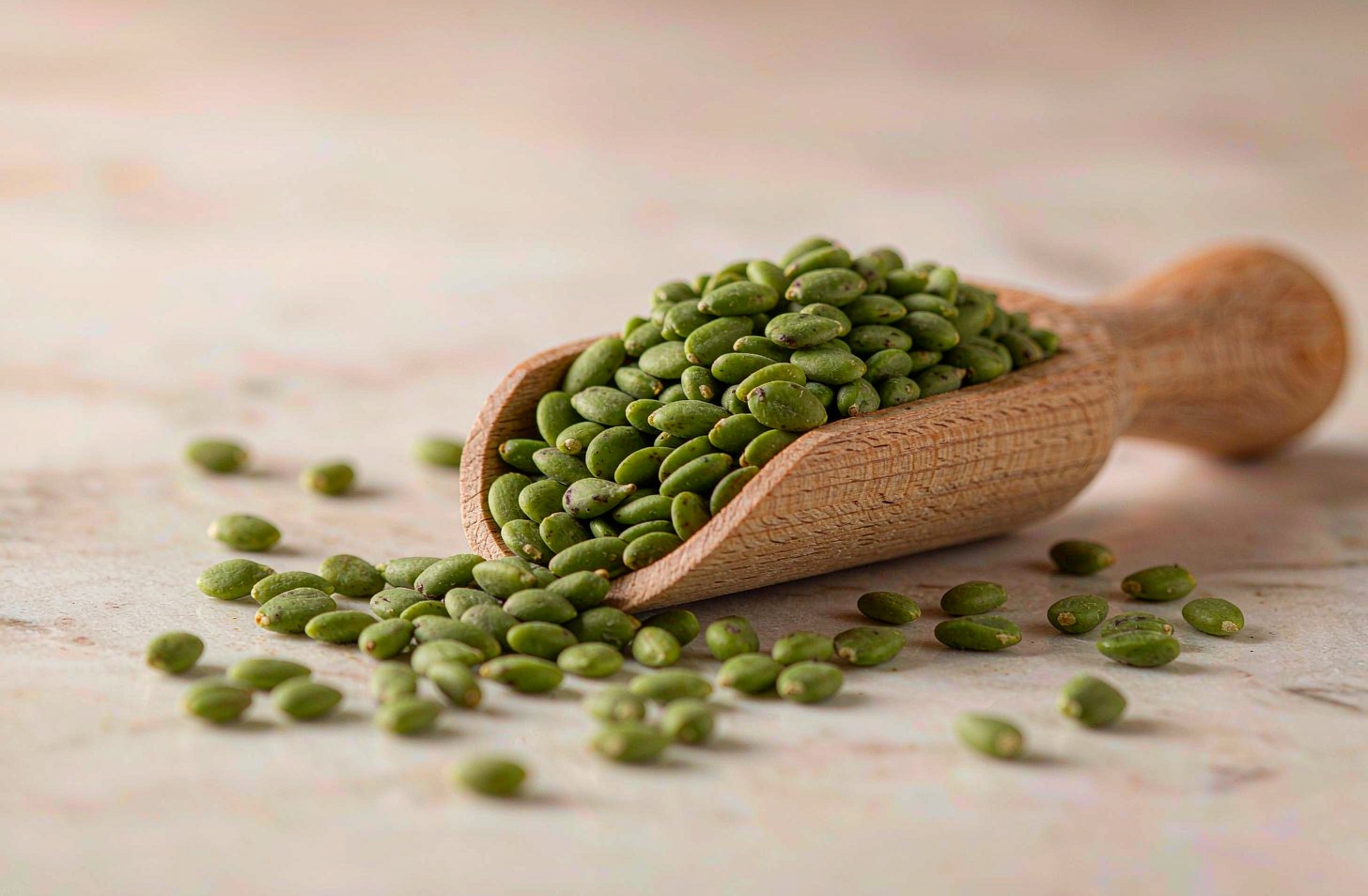
China Pepitas Supplier: A Buyer’s Guide to Sourcing Hulled Pumpkin Seeds
Finding a reliable China pepitas supplier comes down to understanding three things: the hulling and grading capability of the factory, the export certifications they hold, and whether they can match the color and purity standards your market demands. Pepitas — hulled pumpkin seed kernels — are one of the most in-demand ingredients in the North American snack, health-food, and bakery industries, and China is the world’s largest origin and exporter. This guide walks buyers through how to evaluate Chinese pepitas suppliers, what specs to request, and how to lock in consistent bulk quality.
Whether you are a food manufacturer in the United States, a private-label brand in Mexico, a European distributor, or a Middle East trading company sourcing light-green or snow-white pepitas by the container, the criteria below apply to every shipment.
What Are Pepitas?
The word pepitas comes from Spanish (pepita de calabaza) and is the standard trade name in the Americas for hulled pumpkin seed kernels. In Europe and Asia, the same product is usually called pumpkin seed kernels or hulled pumpkin seeds. All three terms refer to the edible inner kernel that remains after the hard white outer shell is removed.
The main commercial varieties exported by Chinese suppliers are:
- Shine Skin pepitas — light green, smooth, glossy surface; highest oil content; ideal for roasting and snack packs;
- GWS pepitas — snow-white, thin skin; premium visual grade for confectionery and health-food bars;
- Snow White pepitas — bright ivory, extremely uniform; preferred by Japanese and premium European buyers.
When you contact a China pepitas supplier, specifying the variety, grade, and target market upfront eliminates mismatched quotes and saves weeks of back-and-forth.
Why China Dominates the Global Pepitas Supply Chain
China produces and exports more pumpkin seeds and kernels than any other country. The reasons are structural:
- Climate advantage — Inner Mongolia’s dry continental climate, long sunshine hours, and large temperature swings between day and night produce plump, high-oil seeds with excellent kernel yield;
- Integrated hulling clusters — modern dehulling, gravity separation, and optical color-sorting lines are concentrated around Hohhot and Bayannur, giving suppliers direct control over purity and throughput;
- Cost efficiency — scale, mechanized harvesting, and short farm-to-factory distances keep raw material and processing costs lower than Eastern European or South American alternatives;
- Export infrastructure — direct rail links from Inner Mongolia to Tianjin and Dalian ports mean container stuffing within 48 hours of final inspection.
For buyers, the main sourcing risk is not availability but grade consistency: color, purity, and broken-kernel rates can shift between harvest years and between factories. The best defense is a written specification sheet, pre-shipment samples, and third-party inspection.
How Chinese Suppliers Process Pepitas for Export
Mechanical Hulling and Separation
Raw in-shell seeds are fed through roller dehullers that crack the shell without crushing the kernel. A multi-stage separation system — combining vibration sieves, gravity tables, and air classifiers — removes shell fragments, flat kernels, and foreign matter. Leading suppliers run double-pass hulling to push purity above 99.5%.
Optical Color Sorting
High-speed CCD color sorters scan each kernel and eject dark, yellow, or damaged pieces. For AAA grade pepitas, some suppliers add a manual hand-picking line after machine sorting to catch defects the camera misses. This step is what separates premium export grades from standard commodity lots.
Moisture Control and Metal Detection
Before packing, kernels pass through moisture meters (target ≤ 7–8%) and metal detectors. Vacuum packing in 25 kg PP bags with inner PE liners locks in freshness and prevents rancidity during ocean transit.
Export Specifications for China Pepitas
| Parameter | AAA Grade | AA Grade | A Grade |
|---|---|---|---|
| Purity | ≥ 99.9% | ≥ 99.7% | ≥ 99.5% |
| Moisture | ≤ 7% | ≤ 7.5% | ≤ 8% |
| Broken / half kernels | ≤ 2% | ≤ 3% | ≤ 5% |
| Admixture | ≤ 0.05% | ≤ 0.1% | ≤ 0.5% |
| Color | Uniform light green or snow white | Good, minimal variance | Acceptable |
| Size | 10–11 mm / 11+ mm | 9–10 mm / 10–11 mm | Mixed |
Certifications Every Importer Should Verify
- HACCP / ISO 22000 — baseline food-safety management;
- ISO 9001 — quality system certification;
- HALAL — mandatory for Middle East and Southeast Asian markets;
- Kosher — required for Jewish-market distribution in North America and Europe;
- BRC / IFS — expected by major retailers and food manufacturers in the EU and UK;
- USDA Organic / EU Organic — necessary if you sell into the organic channel.
Always confirm the certifying body and expiration date. A supplier that genuinely holds these certificates will share scan copies within one business day.
Packaging, MOQ, and Logistics
- Sampling orders — 1–5 kg courier samples, or 500 kg air-freight trial lots;
- LCL trial shipments — 1–5 tons for first-time buyers who want to inspect quality before committing to a container;
- FCL bulk orders — 12–14 tons (20 ft) or 24–26 tons (40 ft HQ);
- Standard export packing — 25 kg vacuum PP woven bags, stacked on pallets, shrink-wrapped;
- Retail / private-label packing — 12.5 kg cartons, 1 kg stand-up pouches, or printed retail bags (MOQ 1–2 tons per design);
- Common Incoterms — FOB Tianjin/Dalian, CIF main port, or DDP for established accounts.
Payment terms for first orders are typically 30% deposit + 70% against copy of B/L. Large or risk-averse buyers can use L/C at sight.
Market Applications for Imported Pepitas
The demand for China-sourced pepitas spans multiple food categories:
- Roasted snacks — salted, chili-lime, tamari, or maple-flavored pepita packs;
- Bakery — artisan bread, rolls, muffins, and pastry toppings;
- Granola and cereal — adds crunch, protein, and visual texture;
- Confectionery — chocolate bark, energy balls, and brittle inclusions;
- Plant-based foods — dairy-free cheese, pesto, and meat-alternative formulations;
- Pumpkin seed oil — cold-pressed gourmet and cosmetic-grade oil.
Each application requires different roast stability, oil content, and microbiological limits. Tell your supplier the end use before requesting a quote so they recommend the right grade.
Red Flags When Vetting a China Pepitas Supplier
- Cannot name the city or show the factory on a map — trading companies often hide subcontracting;
- Quotes 20%+ below market range — purity or grade substitution is likely;
- Refuses third-party inspection (SGS, Bureau Veritas, Intertek) before shipment;
- Certificates are expired, blurry, or issued by unrecognized bodies;
- No pre-shipment sample policy — every reputable exporter offers samples;
- Pressure to pay 100% in advance without L/C or escrow protection.
Why Ouji International Is a Trusted China Pepitas Supplier
Hohhot Ouji International Co., Ltd. is an agricultural food exporter based in Hohhot, Inner Mongolia — the center of China’s pumpkin seed production belt. Established in 2013, Ouji operates with 2 processing plants and 6 automatic production lines, supplying Shine Skin, GWS, and Snow White pepitas to buyers in North America, Europe, the Middle East, and Asia.
What importers value when working with Ouji:
- Origin advantage — direct sourcing from Inner Mongolia farms means fresher stock and shorter lead times;
- Integrated hulling and sorting — in-house dehulling, optical color sorting, and hand-picking for premium grades;
- Certified operations — HACCP, ISO 22000, ISO 9001, HALAL, and Kosher certificates available on request;
- Flexible packing — bulk vacuum bags, retail cartons, and private-label options;
- Full export support — phytosanitary certificates, certificates of origin, and third-party inspection coordination.
Frequently Asked Questions
What is the difference between pepitas and pumpkin seed kernels?
There is no product difference. Pepitas is the term used in the Americas, while pumpkin seed kernels is the standard name in Europe and Asia. Both refer to hulled, edible pumpkin seeds.
Which Chinese region produces the best pepitas?
Inner Mongolia — particularly Hohhot and Bayannur — is widely regarded as the top origin due to its dry climate, long sunlight exposure, and mature hulling infrastructure. Suppliers based here control quality from farm to container.
What is the minimum order quantity for China pepitas?
Most suppliers accept trial orders of 500 kg to 1 ton. Container orders typically start at 12–14 tons (20 ft) or 24–26 tons (40 ft). Private-label retail packing usually requires 1–2 tons minimum per SKU.
How do I check pepitas quality before placing a large order?
Request a 1–2 kg pre-shipment sample, inspect for color uniformity and shell fragments, then place a 500 kg to 1-ton trial order. Book third-party inspection before the first full container to verify purity, moisture, and aflatoxin levels.
Do pepitas require organic certification?
Only if you sell into the organic channel. Conventional pepitas represent the majority of export volume. If you need organic, confirm that your supplier holds USDA Organic or EU Organic certification and can provide traceability documentation back to the farm.
How long does shipping take from China to the United States or Europe?
Ocean freight from Tianjin to Los Angeles or Long Beach is approximately 14–18 days; to European main ports (Rotterdam, Hamburg) is approximately 25–30 days. Add 7–10 days for inland transit, customs clearance, and pre-shipment inspection.
Conclusion
Sourcing pepitas from China is cost-effective and scalable when you work with the right supplier. Focus on hulling capability, grade consistency, certifications, and export documentation during vetting. Lock every specification into writing, test with samples and a trial order, and never skip pre-shipment inspection.
If you need a reliable China pepitas supplier for Shine Skin, GWS, or Snow White kernels, contact Ouji International for current specifications, samples, and competitive bulk pricing. We deliver container loads of export-grade pepitas to buyers worldwide — on spec, on time, with full documentation.