

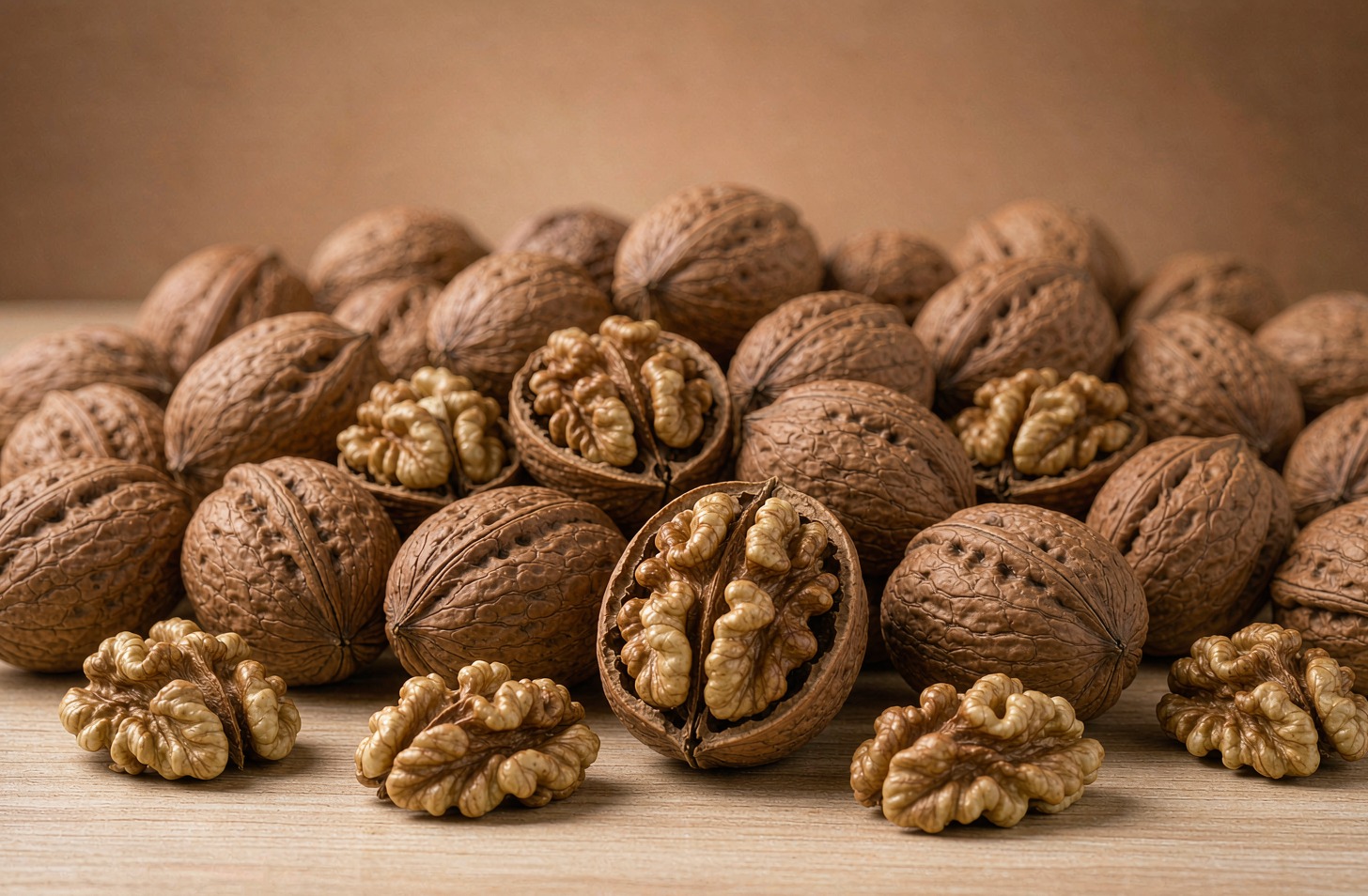
How to Buy Walnuts in Bulk from China: Importer’s Guide
Buying walnuts in bulk from China starts with three decisions: the right variety, the right grade, and the right supplier. China is one of the world’s largest walnut producers and exporters, shipping whole walnuts, walnut kernels, walnut halves, and walnut pieces to Europe, the Middle East, North America, and Asia. For B2B importers, the safest way to buy is to define your quality specifications in writing, request physical samples, verify certifications, agree on inspection terms, and lock payment and delivery conditions into a clear contract before the first container ships.
This guide explains how to source Chinese walnuts in bulk without overpaying or receiving the wrong grade. Whether you are a snack manufacturer, bakery ingredient buyer, wholesale distributor, or retail packer, the steps below will help you compare origins, evaluate suppliers, and manage export logistics from China to your port.
Why Source Walnuts in Bulk from China
China has been the world’s leading walnut producer for more than a decade. According to FAO production data, Chinese walnut output accounts for roughly half of global supply. That scale creates clear advantages for importers:
- Large, stable volumes — enough supply for full container loads and long-term contracts;
- Competitive farm-gate pricing — domestic growing regions keep raw nut costs lower than many Western origins;
- Wide product range — whole walnuts in shell, light-colored kernels, walnut halves, broken pieces, and blanched kernels;
- Mature processing infrastructure — cracking, color-sorting, grading, and vacuum packing lines are widely available;
- Established export channels — regular shipments to the EU, Middle East, North Africa, North America, and Southeast Asia.
The main risk is quality inconsistency between suppliers. Chinese walnuts vary by growing region, shell thickness, kernel color, and fat content. Buying in bulk without clear specs can lead to a container that looks cheap on paper but does not match your market’s expectations.
Main Walnut Origins and Varieties in China
Before contacting suppliers, know which origin matches your market. The three most important walnut-growing regions in China are:
- Xinjiang — famous for thin-skinned, light-kernel walnuts with high oil content; preferred for snacking and retail packs;
- Yunnan — deep-flavored walnuts with darker kernels; often used for bakery ingredients and oil pressing;
- Shaanxi — large-sized walnuts with a good shell-to-kernel ratio; popular for mixed nuts and food manufacturing.
Suppliers will describe walnuts by shell type and kernel grade. The most common commercial categories are:
- Paper-shell / thin-shell walnuts — easy to crack, light kernel color, premium price;
- Hard-shell walnuts — thicker shell, longer shelf life, lower kernel yield, used for in-shell retail;
- Light halved kernels — visual grade for snack and retail packing;
- Amber / brown pieces — lower grade used for baking, cereals, and oil extraction.
How to Buy Walnuts in Bulk from China: A Step-by-Step Process
1. Define Your Specifications in Writing
Do not ask for a “walnut price.” Ask for a price against a written specification sheet. Include:
- Product form — whole in-shell, kernel halves, pieces, or blanched;
- Variety / origin preference — Xinjiang thin-shell, Yunnan, Shaanxi, or mixed;
- Grade — premium light halves, extra light, amber pieces, etc.;
- Size — for kernels, specify count per kilogram or size screen;
- Moisture and admixture limits — e.g., moisture ≤ 8%, admixture ≤ 0.5%;
- Packing — 10 kg, 25 kg, or 50 kg cartons, vacuum bags, or retail pouches;
- Container target — 20 ft or 40 ft quantity so the supplier can quote accurately.
2. Shortlist Suppliers with Real Export Experience
Look for exporters based in or near walnut-growing regions. A supplier with its own cracking and grading facility will deliver more consistent quality than a trading company that sources from multiple small mills. Check:
- Business registration and export license;
- Factory address and production-line photos or video;
- Certifications such as HACCP, ISO 22000, ISO 9001, HALAL, and Kosher;
- Existing buyer references in markets similar to yours;
- Willingness to provide samples and accept third-party inspection.
3. Request Samples and Compare Lots
Order at least three samples from different suppliers. Evaluate each sample blind against the same criteria:
- Kernel color — extra light, light, or amber;
- Shell thickness and crack-out rate for in-shell walnuts;
- Taste and rancidity — fresh walnuts should be sweet and nutty, not bitter;
- Moisture — a handheld nut moisture meter helps avoid mold risk;
- Foreign matter and broken pieces percentage.
4. Agree on Inspection and Payment Terms
For your first order, never skip third-party inspection. Use SGS, Bureau Veritas, Intertek, or another recognized inspector to check quality before shipment. Payment terms should protect both sides:
- 30% deposit + 70% against copy of bill of lading is common for trusted suppliers;
- Letter of credit (LC) is safer for first-time transactions;
- Escrow or inspection-triggered release reduces risk for both parties.
5. Lock the Contract and Track Shipment
The purchase contract should repeat every specification, inspection point, packing detail, delivery term (FOB, CIF, CFR, or DDP), and claim procedure. After loading, monitor the shipment with the bill of lading and arrival schedule. On arrival, sample the container again and compare it with the pre-shipment inspection report.
Walnut Quality Grades and Typical Export Specifications
Bulk walnut specifications vary by buyer and market, but the table below shows commonly requested standards for Chinese export walnuts:
| Parameter | Premium Grade | Standard Grade | Processing Grade |
|---|---|---|---|
| Product form | Light halves / extra light | Light amber halves | Pieces / amber |
| Kernel color | Extra light (EL), light | Light amber | Amber to brown |
| Moisture | ≤ 8% | ≤ 8% | ≤ 9% |
| Admixture / foreign matter | ≤ 0.1% | ≤ 0.5% | ≤ 1% |
| Broken / imperfect kernels | ≤ 5% | ≤ 10% | negotiable |
| Packing | 10–25 kg vacuum cartons | 25 kg cartons / pp bags | 25–50 kg pp bags |
| Typical use | Retail snack packs | Wholesale / mixed nuts | Bakery / oil / cereal |
Always confirm that the supplier’s quote matches the exact grade in the table. A lower price usually means a lower grade or higher moisture and broken percentage.
Certifications and Food Safety Standards
Walnuts are an edible agricultural product, so food safety certification is non-negotiable. Ask the supplier to show current certificates with the certifying body and validity date. The most common standards are:
- HACCP / ISO 22000 — food-safety management systems required by most importing countries. See ISO 22000:2018 for the international framework;
- ISO 9001 — quality management system;
- HALAL certificate — required for the Middle East and many Southeast Asian markets;
- Kosher certificate — needed for Jewish-market retailers and some North American buyers;
- Phytosanitary certificate — issued by Chinese customs to confirm the shipment is free of regulated pests;
- Heavy-metal and aflatoxin test reports — increasingly requested by EU and US buyers.
A serious supplier will provide these documents before you ask. If a supplier hesitates or sends expired certificates, treat it as a red flag.
Pricing, Packaging, and Logistics for Bulk Orders
Bulk walnut prices move with crop size, exchange rates, and global demand. For a stable import plan, request a seasonal contract price rather than a spot quote. Typical order sizes are:
- Trial order — 1–5 metric tons, usually shipped by LCL (less-than-container-load);
- 20 ft container — around 12–14 metric tons depending on packing;
- 40 ft HQ container — around 24–26 metric tons.
Most Chinese walnut exporters quote FOB Tianjin / Qingdao or CIF your destination port. Make sure the quote states:
- Exact product and grade;
- Packing material and net/gross weight per carton;
- Incoterm and port of loading;
- Lead time from deposit to shipment;
- Payment term and currency.
Vacuum-packed cartons extend shelf life to 12–18 months in cool, dry storage. For hot or humid climates, consider nitrogen-flushed bags inside outer cartons.
Common Mistakes When Buying Walnuts from China
- Comparing only price — a low price often hides higher moisture, more broken kernels, or lower grade;
- Skipping samples — photos cannot show taste, freshness, or crack-out rate;
- Ignoring seasonal timing — new-crop walnuts are harvested in September–October; buying during the off-season may mean older stock;
- No written specs — verbal agreements lead to disputes about grade and admixture;
- First order without inspection — always use third-party inspection until trust is established;
- Paying 100% in advance — use deposit + balance against documents or a letter of credit.
Why Ouji International Is a Reliable Walnut Supplier
Ouji International, based in Hohhot, Inner Mongolia, is an agricultural food exporter with deep experience in the Chinese nut supply chain. Established in 2013, the company works with two processing plants and six automatic production lines, supplying walnuts, walnut kernels, pumpkin seeds, sunflower seeds, pecans, and cashews to buyers in Europe, the Americas, Japan and South Korea, the Middle East, North Africa, and South America.
What bulk walnut buyers typically value when working with Ouji International:
- Origin sourcing — direct access to Xinjiang, Yunnan, and Shaanxi walnut growing regions;
- Integrated processing — cracking, grading, color-sorting, and packing under controlled conditions;
- Grade transparency — clear specification sheets with sample confirmation before shipment;
- Export documentation — full customs paperwork and third-party inspection support;
- Flexible packing — bulk cartons, vacuum bags, and private-label retail packs.
Frequently Asked Questions
What is the minimum order for bulk walnuts from China?
Most exporters accept trial orders of 1–5 metric tons. Full container loads are usually 12–14 tons in a 20 ft container or 24–26 tons in a 40 ft HQ container.
Which Chinese walnut origin is best for retail snacking?
Xinjiang thin-shell walnuts are the most popular for retail snacking because they are easy to crack, have light-colored kernels, and deliver a high crack-out rate.
Do I need HALAL or Kosher certification for walnuts?
If you supply the Middle East, Southeast Asia, or Jewish-market retailers, yes. Ask your supplier to confirm current HALAL and Kosher certificates before ordering.
How can I avoid receiving low-quality walnuts?
Define your specifications in writing, request samples from at least three suppliers, place a small trial order, and use third-party inspection before the first full shipment.
What documents are needed to import walnuts from China?
Standard documents include the commercial invoice, packing list, bill of lading, certificate of origin, phytosanitary certificate, and any market-specific certificates such as HALAL, Kosher, or aflatoxin test reports.
When is the best time to buy Chinese walnuts?
The new harvest runs from September to October. Buying between October and February usually gives you the freshest stock and the best prices for the season.
Conclusion
Knowing how to buy walnuts in bulk from China comes down to preparation: choose the right origin and grade, verify the supplier’s certifications and facilities, sample before you commit, and protect your payment with clear contract terms and third-party inspection. The lowest price is rarely the best deal if it does not match your market’s quality requirements.
If you are sourcing Chinese walnuts, walnut kernels, or walnut pieces in bulk, contact Ouji International for samples, specifications, and export pricing. Our team can help you match the right walnut grade to your market and deliver it reliably to your port.