

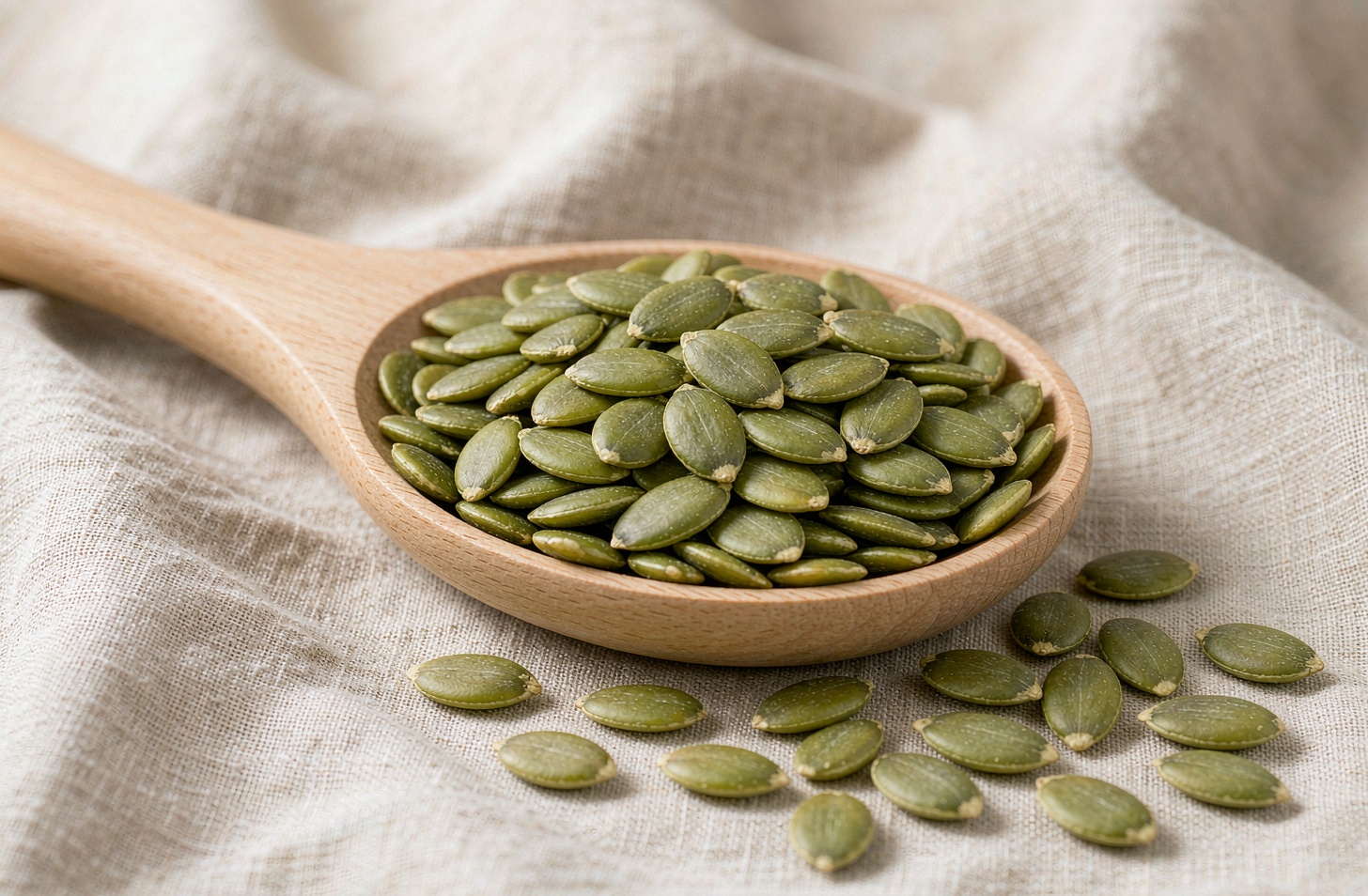
Pumpkin Kernel Exporter China: A Complete Buyer’s Guide
A reliable pumpkin kernel exporter in China can supply food manufacturers, snack brands, and wholesale importers with consistent grades of hulled pumpkin seeds at competitive prices. China is the world’s largest producer of pumpkin seeds, and its top exporters ship thousands of containers of Shine Skin, GWS, and Snow White kernels to Europe, the Middle East, North America, and Asia every season. Choosing the right exporter means looking beyond price: you need to verify certifications, grading capability, export documentation, and quality-control processes. This guide explains what a professional pumpkin kernel exporter in China should offer and how to evaluate one before placing your first order.
Whether you are sourcing bulk pumpkin seed kernels for roasting, bakery mixes, or retail packs, the same sourcing rules apply. Read on for specifications, grade comparisons, pricing factors, and a practical exporter vetting checklist.
Why Source Pumpkin Kernels from a Chinese Exporter
China dominates global pumpkin seed production. The country grows and processes the majority of the world’s supply, with the largest concentration in Inner Mongolia, Xinjiang, and Gansu. These regions combine cold nights, dry air, and long sunshine hours, which produce plump, light-colored kernels with low moisture and good shelf stability.
Working with a Chinese exporter gives buyers several advantages:
- Direct factory pricing — exporters connected to processing plants remove intermediary margins;
- Grade consistency — modern color sorters, gravity separators, and metal detectors produce uniform lots;
- Variety choice — Shine Skin, GWS (snow-white), and Snow White kernels can be sourced from the same region;
- Export experience — established exporters understand phytosanitary certificates, HALAL/Kosher documentation, and destination-country food regulations.
The key risk is supplier inconsistency. A low price means little if the delivered kernels fail your aflatoxin test, arrive with broken pieces, or miss the shipping documents. That is why vetting the exporter is just as important as choosing the origin.
What Is a Pumpkin Kernel Exporter?
A pumpkin kernel exporter is a company licensed to process, pack, and ship hulled or unhulled pumpkin seeds across borders. Exporters may operate their own factories, manage contracted processing lines, or act as trading companies that coordinate sourcing and logistics. For B2B buyers, the most reliable partners are exporters that control at least part of the processing chain — from raw seed purchase to final inspection.
At Ouji International, for example, pumpkin kernel export is supported by two processing facilities in Inner Mongolia with six automatic production lines, covering cleaning, dehulling, color sorting, grading, and metal detection. This integrated model is what importers should look for when evaluating a long-term supplier.
Main Varieties Exported from China
Not all pumpkin kernels are the same. The three main varieties exported from China differ in color, shell thickness, and market use.
| Variety | Kernel Color | Shell | Common Markets | Typical Uses |
|---|---|---|---|---|
| Shine Skin | Dark green with shine | Hard, inedible | China domestic, Middle East | In-shell roasting, snack packs |
| GWS (Snow White / 白板) | Snow white to ivory | Thin, papery | Europe, North America, Asia | Bakery, cereal, kernel snacks |
| Snow White Hulled | Uniform light green | Removed (kernel only) | EU, USA, Japan | Health food, protein bars, oil pressing |
When contacting a pumpkin kernel exporter in China, always state the variety first. Many exporters specialize in one type and source the others through subcontractors. An exporter with in-house processing for all three varieties offers better quality control and mixed-container flexibility.
Pumpkin Kernel Grade and Specification Standards
Export contracts should define quality in measurable terms. The table below shows typical specifications used by Chinese exporters for hulled kernels.
| Parameter | AAA Grade | AA Grade | A Grade |
|---|---|---|---|
| Purity | ≥ 99.95% | ≥ 99.90% | ≥ 99.50% |
| Moisture | ≤ 7.0% | ≤ 8.0% | ≤ 9.0% |
| Admixture | ≤ 0.05% | ≤ 0.10% | ≤ 0.50% |
| Broken / Split | ≤ 2.0% | ≤ 3.0% | ≤ 5.0% |
| Aflatoxin B1 | ≤ 2 μg/kg | ≤ 2 μg/kg | ≤ 5 μg/kg |
| Size (seeds per 100 g) | 230–250 | 250–270 | 270+ |
These numbers are industry benchmarks. Always request a pre-shipment inspection report from an independent laboratory such as SGS, Bureau Veritas, or Intertek to confirm the delivered lot matches the contract.
How to Evaluate a Pumpkin Kernel Exporter in China
1. Check Certifications and Audit History
Food-safety documentation is the first filter. A qualified exporter should provide:
- ISO 22000 or HACCP — food-safety management system certification;
- ISO 9001 — quality management system;
- HALAL and Kosher certificates — essential for Middle East, Southeast Asia, and Jewish-market buyers;
- BRC or IFS — often required by European retailers and large manufacturers.
Ask for the certificate number, certifying body, and validity date. Verify that the scope covers the specific plant that will process your order.
2. Inspect Processing and Sorting Equipment
A professional exporter should run raw seeds through a standardized processing line:
- Pre-cleaning — removes dust, stems, and foreign matter;
- Dehulling and separation — separates kernels from shells;
- Color sorting — removes damaged, discolored, or moldy kernels;
- Gravity separation — removes stones and heavy impurities;
- Metal detection — detects ferrous and non-ferrous contamination;
- Final hand-picking — visual inspection for premium grades.
If possible, request a short factory video or schedule a third-party audit. Exporters that own their processing lines are usually more transparent about their facilities than pure trading companies.
3. Review Export Documentation Experience
International food trade depends on paperwork. Confirm that the exporter can prepare:
- Commercial invoice and packing list;
- Bill of lading or airway bill;
- Certificate of origin;
- Phytosanitary certificate;
- Health certificate (when required by destination);
- Fumigation certificate (for certain countries);
- HALAL / Kosher certificate copies;
- Third-party inspection report (SGS, Bureau Veritas, Intertek).
Experienced exporters will also know which ports and Incoterms work best for your region. Ask whether they can quote FOB, CIF, or DDP and whether they have shipped to your country before.
4. Request Samples with a Clear Specification Sheet
Never place a container order without evaluating a physical sample. A proper sample package should include:
- Representative lot of at least 500 g;
- Written specification sheet with the parameters in the table above;
- Certificate of analysis for moisture, purity, and aflatoxin;
- Packaging photo showing label, lot number, and weight.
Compare samples from at least two exporters before deciding. The best exporter is not always the cheapest — it is the one that consistently delivers the same quality as the approved sample.
Pricing Factors When Buying from a Chinese Exporter
Pumpkin kernel export prices move throughout the year. Understanding the main price drivers helps buyers time purchases and negotiate contracts.
- Harvest cycle — Chinese pumpkin seeds are harvested from September to November; prices are usually lowest right after harvest;
- Raw material cost — farm-gate prices depend on yield, weather, and domestic demand;
- Grade and purity — AAA grade with 99.95% purity commands a premium over AA or A grades;
- Packaging — vacuum-sealed retail packs cost more than standard 25 kg PP bags;
- Order volume — full-container-load (FCL) orders receive better per-kilogram pricing than less-than-container-load (LCL);
- Currency and freight — USD/CNY rates and ocean freight fluctuations affect the final landed cost.
Most exporters quote on an FOB Tianjin / Qingdao basis. For CIF or DDP terms, ask for a detailed freight and insurance breakdown to avoid hidden charges.
Packaging and Container Loading
Standard export packaging for bulk pumpkin kernels is 25 kg or 50 kg polypropylene bags with inner polyethylene liner. Some buyers request vacuum packing, nitrogen flushing, or retail-ready pouches. A 20-foot container typically holds 16–18 metric tons, while a 40-foot container holds 24–26 metric tons, depending on bag weight and stacking.
Confirm the pallet configuration, load weight, and moisture protection before shipment. Kernels with moisture above 9% are at higher risk of mold during long ocean transits, especially to humid destinations.
Conclusion: Choose an Exporter That Controls Quality
Finding a dependable pumpkin kernel exporter in China requires more than comparing quotes. The best partners combine origin access, modern processing equipment, transparent certifications, and proven export documentation. Use the checklist above to evaluate candidates, request samples with full specifications, and always book a third-party inspection before shipment.
If you are looking for a China-based exporter with integrated pumpkin kernel processing, contact Ouji International for specifications, samples, and a competitive bulk quotation.
Frequently Asked Questions
What is the difference between a pumpkin kernel exporter and a pumpkin seed supplier?
A pumpkin seed supplier may sell raw, in-shell seeds or act as a domestic trader. A pumpkin kernel exporter specifically processes and ships hulled kernels across borders, usually with full export documentation and food-safety certifications.
Which Chinese provinces produce the most pumpkin kernels for export?
The largest production areas are Inner Mongolia, Xinjiang, and Gansu. Inner Mongolia is especially known for large, uniform kernels with low moisture and high export suitability.
What is the minimum order quantity for a Chinese pumpkin kernel exporter?
Most exporters accept 1 metric ton as a trial order, but container-load quantities of 16–26 metric tons receive the best unit pricing and priority scheduling.
How do I verify a pumpkin kernel exporter’s quality claims?
Request samples with a certificate of analysis, check certifications with the issuing bodies, and book an independent pre-shipment inspection through SGS, Bureau Veritas, or Intertek.
What is the best season to buy pumpkin kernels from China?
The harvest runs from September to November. Prices are usually most competitive from November through January, before the new crop is fully consumed.
Do Chinese pumpkin kernel exporters provide HALAL or Kosher certificates?
Yes. Reputable exporters serving the Middle East, Southeast Asia, and North American markets typically hold HALAL and Kosher certificates. Always request copies and confirm validity.