

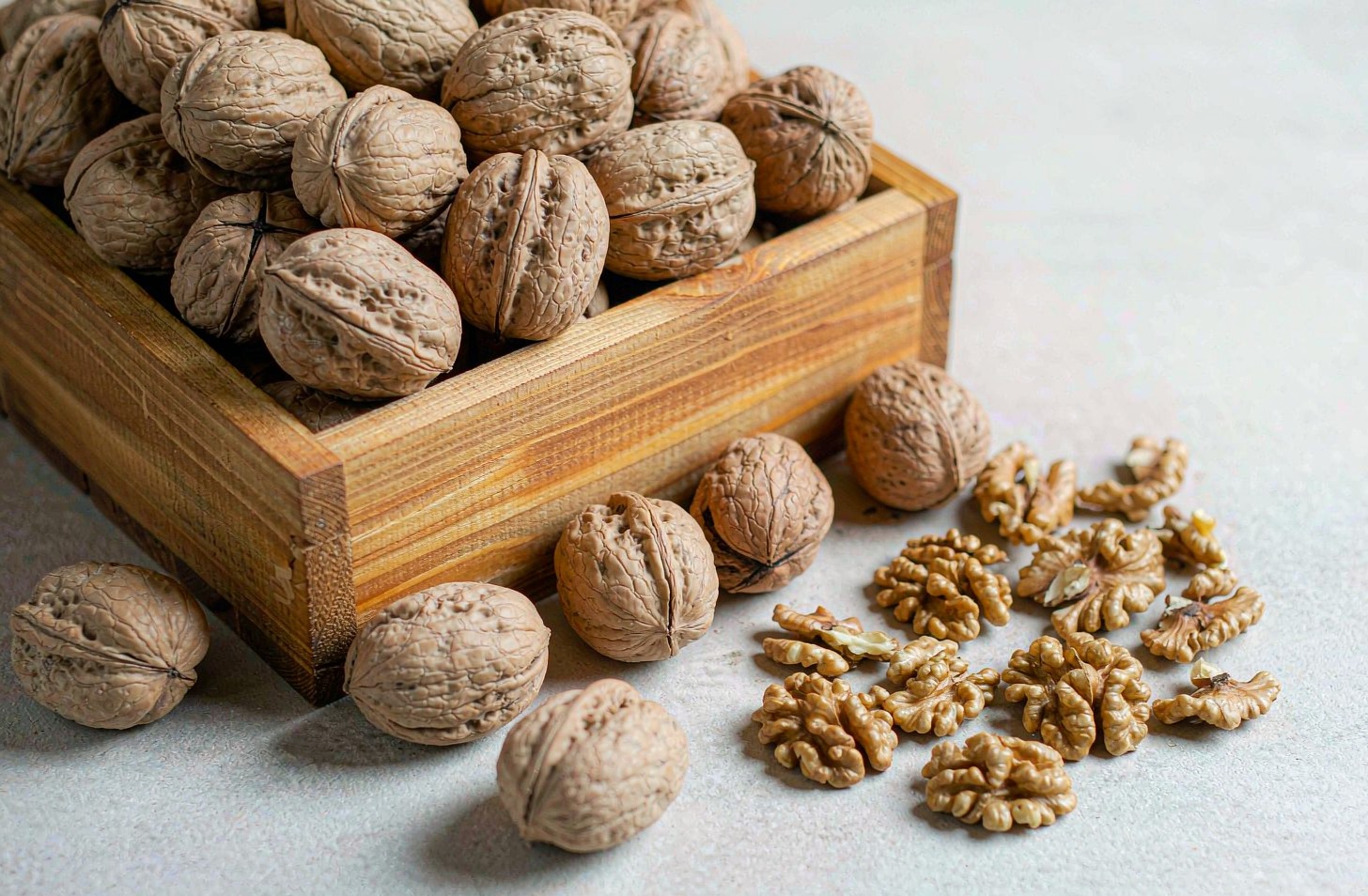
Bulk walnut supplier selection comes down to four things: the right variety for your market, a verifiable specification sheet, honest packaging and loading terms, and a factory — not a reseller — behind the contract. Chinese in-shell walnuts (primarily from Xinjiang, Shaanxi, and Yunnan) dominate global bulk trade because of thin shells, kernel yields of 48–60%, and FOB prices that typically run 15–30% below US or Chilean equivalents. This guide explains how in-shell walnut sourcing actually works: variety comparison, sizing and grading, contract specifications, pricing drivers, MOQ and container loading, and a practical supplier vetting checklist for importers in the Middle East, Europe, North Africa, and beyond.
Why Importers Buy In-Shell Walnuts in Bulk
Most B2B content focuses on shelled walnut kernels, but in-shell walnuts remain a high-volume category in their own right — especially across the Middle East, North Africa, Turkey, and holiday-season retail in Europe. Understanding why buyers choose in-shell helps you negotiate the right spec.
- Shelf life. The shell is a natural barrier. In-shell walnuts store 12+ months under cool, dry conditions, versus roughly 6 months for kernels — critical for year-round distribution.
- Lower unit cost. You pay for shell weight, but FOB prices per ton are substantially lower, and retail markets absorb in-shell product at strong margins, particularly around Ramadan, Christmas, and Lunar New Year.
- Freshness perception. Cracking at the point of sale signals freshness. Middle Eastern and Turkish nut retailers overwhelmingly sell in-shell product for this reason.
- Versatility. One in-shell lot can be retailed directly, cracked into kernels, or blended — giving traders optionality that pre-shelled product does not.
If your end use is industrial (bakery, confectionery, ingredients), kernels are usually the better buy — see our wholesale walnut kernels buying guide for that route.
Chinese In-Shell Walnut Varieties: What Buyers Should Know
China is the world’s largest walnut producer, and export-grade in-shell walnuts come mainly from three production zones. Variety determines shell thickness, kernel yield, and ultimately your crack-out rate.
| Variety | Main Region | Shell | Kernel Yield | Typical Market Position |
|---|---|---|---|---|
| Xinjiang 185 (paper shell) | Xinjiang | Very thin, easy-crack | 55–60% | Premium retail, gifting |
| 33 (Zaofeng) | Shaanxi / Shanxi | Thin | 50–55% | Mainstream export grade |
| Xiangling | Shandong / Shaanxi | Medium-thin | 48–53% | Volume export, cracking plants |
| Yunnan wild-type | Yunnan | Medium, darker kernel | 45–50% | Oil pressing, price-sensitive markets |
Xinjiang paper-shell walnuts (like the 185) command a price premium for a reason: high sunlight and arid conditions produce thin shells, light kernel color, and a sweet flavor. Buyers supplying retail chains in the Gulf region typically specify Xinjiang origin; buyers feeding cracking operations often choose 33 or Xiangling for cost efficiency. Our Xinjiang walnut exporter guide covers that region’s specifics in depth.
Sizing and Grading: How In-Shell Walnuts Are Classified
In-shell walnuts are traded by diameter sizing and by shell appearance. These are the grades you will see on a Chinese export quotation.
Diameter Grades
| Grade | Diameter | Count (pcs/kg, approx.) | Typical Use |
|---|---|---|---|
| XXL | 32 mm+ | ~85–100 | Premium retail, gifting |
| XL | 30–32 mm | ~100–120 | Retail packs |
| L | 28–30 mm | ~120–140 | Standard export, wholesale |
| M | 26–28 mm | ~140–165 | Cracking plants, economy retail |
Appearance Grades
- Light shell / clean shell: well-washed, unblemished shells — required for transparent retail packs.
- Standard shell: minor color variation acceptable — normal for bulk bags and cracking use.
- Split shell allowance: some buyers accept 3–5% split shells at a discount; retail packs usually cap this at 1–2%.
A practical rule: specify both diameter grade and appearance grade in the contract. A quotation for just “28–30 mm” leaves room for interpretation on shell cleanliness, split rate, and kernel color inside the shell.
Contract Specifications: What to Put on the Sheet
A professional in-shell walnut contract should lock down these parameters. These are the reference values a competent bulk walnut supplier should accept for export lots:
| Parameter | Typical Export Spec |
|---|---|
| Moisture (in-shell) | ≤ 8.0% |
| Kernel yield (crack-out) | 48–60% by variety (contract-stated) |
| Bad / mouldy shell rate | ≤ 2% |
| Split shells | ≤ 3% (retail grade ≤ 1.5%) |
| Foreign matter | ≤ 0.5% |
| Live / dead insects | Not permitted |
| Aflatoxin B1 | ≤ 2 µg/kg; total aflatoxins ≤ 4 µg/kg (EU 2023/915) |
| Salmonella / E. coli | Absent in 25 g (kernels after cracking) |
Aflatoxin is the number one rejection reason for walnuts at EU borders, and limits are set under EU Regulation 2023/915. Ask any prospective supplier for third-party test reports (SGS, Eurofins, or Intertek) on the exact lot, not just on a historic crop sample. Suppliers certified under ISO 22000 or HACCP demonstrate the systematic controls — metal detection, moisture management, pest control — that keep these limits consistently met.
Kernel color inside the shell
Even in-shell purchases are judged partly on kernel color once cracked. Buyers typically reference the extra light / light / light amber / amber scale. For retail in-shell trade, “extra light to light” dominance is the norm; cracking-grade lots tolerate more amber. Insist on cracked samples from the actual lot — photos of uncracked shells tell you nothing about what is inside.
Pricing: What Drives In-Shell Walnut FOB Prices
Chinese in-shell walnut prices move on a predictable seasonal and quality-driven cycle. Knowing the drivers protects you from overpaying.
- Harvest timing. Chinese walnuts harvest September–November. New-crop supply peaks October–January and FOB prices bottom out in this window; they climb through spring as stocks tighten.
- Variety and kernel yield. Xinjiang 185 trades at a clear premium over 33 and Xiangling — often 15–25% — justified by crack-out rates above 55%.
- Size grade. Each step up in diameter grade (M → L → XL → XXL) typically adds 8–15% to the price.
- Shell appearance. Light, clean shells for retail packaging add a further premium over standard bulk shell.
- Freight and FX. Container rates and the yuan exchange rate both flow directly into FOB and CFR quotes — always confirm validity periods (typically 7–14 days during harvest season).
MOQ, Packaging, and Container Loading
Bulk in-shell walnuts ship in standard configurations. Confirm these details before signing — they affect landed cost more than most buyers expect.
| Item | Typical Terms |
|---|---|
| MOQ | 1 × 20′ FCL (some suppliers accept 5 MT trial orders) |
| Retail packing | 250 g / 500 g / 1 kg vacuum or pillow bags, private label available |
| Bulk packing | 10 kg or 20 kg cartons; PP woven bags for cracking-grade |
| 20′ GP loading | ~12–13 MT in-shell (carton packed) |
| 40′ GP loading | ~25–26 MT in-shell (carton packed) |
| Payment | 30% deposit + balance against B/L copy, or irrevocable L/C |
| Lead time | 10–20 days after deposit (peak season: confirm early) |
How to Vet a Bulk Walnut Supplier: 7-Point Checklist
The difference between a smooth first order and a disaster is almost always supplier verification. Before committing a deposit:
- Confirm factory status. Ask for the business license, plant photos, and — ideally — a video walkthrough of the sorting and packing lines. Factories quote differently from resellers and control quality directly.
- Verify export history. Request phytosanitary certificates and bills of lading from recent shipments to your region. A supplier shipping to the EU or Gulf has already cleared the regulatory bar.
- Taste and crack the sample. Order samples from the actual crop year and lot. Check kernel color, rancidity (any paint-like or bitter note = reject), shell integrity, and crack-out rate against the claimed yield.
- Review third-party tests. Aflatoxin, moisture, and microbiology reports from SGS/Eurofins on the offered lot — not last season’s.
- Pin down the spec sheet. Get the full parameter table (moisture, defect rates, sizing, packing) written into the proforma invoice and contract.
- Agree on inspection rights. Reserve the right to third-party pre-shipment inspection (CIQ or SGS) at buyer’s cost, with clear rejection thresholds.
- Clarify claims procedure. Know in advance what happens if the container fails inspection at destination: photo evidence windows, compensation mechanics, and reference samples sealed by both parties.
Common Buyer Mistakes with In-Shell Walnuts
- Buying on shell photos alone. Kernel color and yield inside the shell are the real product. Always crack samples.
- Skipping the moisture spec. In-shell walnuts above 8% moisture mold in transit — especially in reefer-less containers through humid routes.
- Ignoring variety in price comparisons. A cheap “Xinjiang walnut” quote that is actually Yunnan wild-type will crack at 45% yield, not 58%.
- Buying too late in the season. Spring purchases from aged stocks carry higher rancidity and insect-damage risk; buy at or shortly after harvest when possible.
- No pre-shipment inspection. The cheapest insurance in the trade.
Frequently Asked Questions
What is a good kernel yield for in-shell walnuts?
48–52% is standard for mainstream export varieties; thin-shell Xinjiang paper-shell types reach 55–60%. Anything below 45% is cracking-grade and should be priced accordingly.
What is the MOQ for bulk in-shell walnuts from China?
Most suppliers quote a full 20′ container (~12–13 MT) as MOQ; some accept 5 MT trial orders at a slightly higher unit price.
How long do in-shell walnuts keep?
12 months or more stored cool (below 20°C) and dry; kernel quality degrades faster once shells are cracked.
When is the cheapest time to buy Chinese walnuts?
October through January, right after harvest, when new-crop supply is highest and stocks are fresh.
Which certificates should an in-shell walnut supplier have?
At minimum: HACCP or ISO 22000, phytosanitary certificate per shipment, and third-party aflatoxin testing. HALAL and Kosher matter for Middle East and food-manufacturing buyers.
How many tons fit in a 40-foot container?
Approximately 25–26 MT of carton-packed in-shell walnuts in a 40′ GP.
Conclusion: Source In-Shell Walnuts on Specs, Not Promises
A reliable bulk walnut supplier wins on documentation, not adjectives: a written spec sheet, lot-level test reports, cracked samples, and clear claim terms. Buy at harvest, fix the variety and grade in the contract, and inspect before shipment — and Chinese in-shell walnuts are among the most cost-effective retail and cracking feedstock in the world.
Ouji International (Hohhot, Inner Mongolia) has supplied walnuts, walnut kernels, and other tree nuts to importers across Europe, the Middle East, Asia, and the Americas since 2013, operating two processing plants with six automated lines. For a current in-shell walnut quotation with full specs, samples, and container loading options, contact Ouji International — we respond within one business day.