

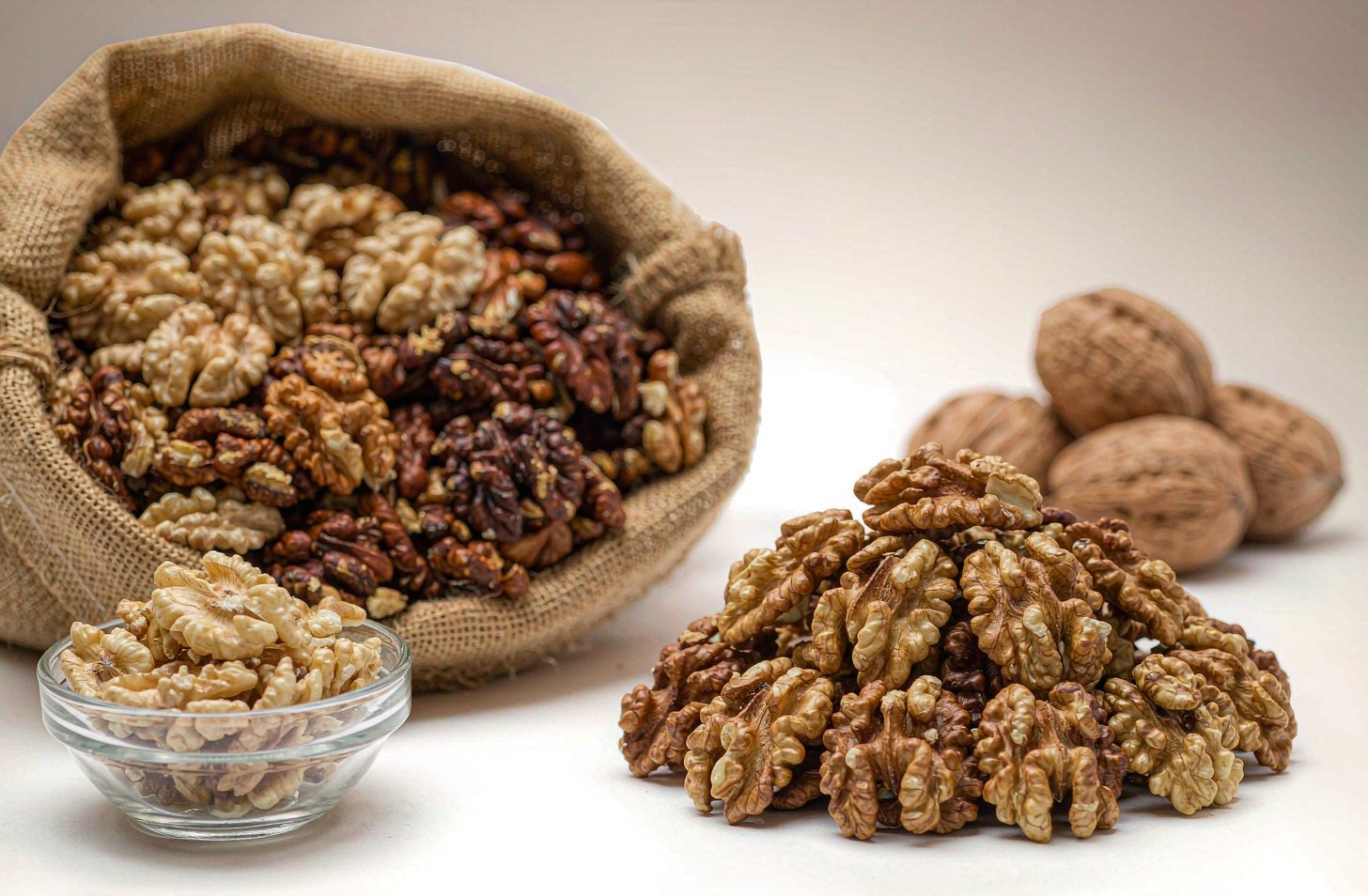
Chinese Walnut Export Company: Buyer’s Guide & Checklist
A Chinese walnut export company is the partner that turns China’s largest-at-scale walnut harvest into sealed, certified, container-ready shipments for your market — but choosing the right one requires verifying six things: origin and raw-material control, processing capability, grading accuracy, food-safety certification, export documentation, and communication reliability. China is the world’s largest walnut producer, accounting for roughly half of global output according to FAO data, with Inner Mongolia and Xinjiang as the premium growing regions. Yet production scale does not guarantee a smooth import experience. This guide explains what a walnut export company actually does, how to vet one step by step, and which specifications and documents to demand before you confirm an order.
Whether you are a wholesale distributor, food manufacturer, bakery chain, or private-label packer sourcing walnut kernels and in-shell walnuts for Europe, North America, Japan, Korea, the Middle East, or North Africa, the checklist below applies to every order — from a 1-ton trial to recurring full-container programs.
What Does a Chinese Walnut Export Company Actually Do?
Many overseas buyers assume any “walnut supplier” is the same. In practice, three different types of companies sell Chinese walnuts, and the differences directly affect your risk:
- Growers and cooperatives — sell raw, unprocessed in-shell walnuts; rarely certified, no export documentation capability;
- Domestic traders — buy and resell across wholesale markets; low prices but no visibility into processing, grading, or food safety;
- Integrated export companies — control raw-material sourcing, run their own processing plants with automatic grading lines, hold certifications, and handle export customs, fumigation, and shipping documents end to end.
For B2B importers, the third category is the only one that can deliver consistent specifications batch after batch. For example, Ouji International, established in 2013 and based in Hohhot, Inner Mongolia, operates two processing plants with six automatic production lines, integrating shelling, grading, color sorting, and packing in-house before exporting to Europe, the Americas, East Asia, the Middle East, and North Africa.
Why Source Walnuts from China?
China’s walnut industry offers structural advantages that are hard to replicate elsewhere:
- Scale and availability — China produces more walnuts than any other country, so volume programs and multi-container orders can be filled reliably across the season;
- Competitive pricing — large domestic acreage keeps raw-material costs below US, Chilean, and most European origins;
- Premium growing regions — the dry climate and large day–night temperature differences in Inner Mongolia and Xinjiang produce thin-shell walnuts with plump, light-colored kernels;
- Modern processing — leading exporters run automatic cracking, shelling, sieve grading, optical color sorting, and metal detection, meeting the tolerances European and North American buyers expect;
- Export maturity — established documentation routines for phytosanitary certificates, certificates of origin, fumigation, and third-party inspection.
The main risks are not origin-related: they are grade substitution, moisture drift, and documentation delays — all of which are controlled by proper supplier vetting and contract terms, covered below.
How to Vet a Walnut Export Company: 6-Point Checklist
1. Company Credentials and Export History
Ask for the business license, export registry, and customs registration number, then verify how many years the company has shipped walnuts specifically — not just “agricultural products” in general. A company exporting since 2013 or earlier has survived multiple quality disputes, shipping disruptions, and regulatory changes. Request two or three reference markets (e.g., “which European or Middle Eastern customers do you currently supply?”) and check whether they ship to markets with strict import controls such as the EU, Japan, or the US.
2. Processing Plant and Production Capacity
Insist on a live video factory audit or an on-site visit. Key checkpoints:
- Automatic grading lines — sieve-based size grading (halves, quarters, pieces, meal) with defined screen sizes;
- Optical color sorters — remove dark, stained, and shell-fragment-contaminated kernels;
- Metal detection and X-ray — final-line contamination control;
- Cold storage capacity — walnut kernels are sensitive to heat and oxidation; kernels should be stored cool and packed promptly;
- Number of plants and lines — a company with two plants and six lines (like Ouji) can absorb peak-season volume without pushing ungraded material out the door.
3. Product Range and Grade Accuracy
A capable export company supplies the full kernel range and grades it accurately:
| Product | Common Grades / Sizes | Typical Use |
|---|---|---|
| Light Halves | Light / Light Amber color, whole halves | Retail packs, bakery decoration, nut mixes |
| Light Quarters & Pieces | Uniform quarter/piece cuts | Bakery, confectionery, cereal & granola |
| Walnut Pieces / Meal | Small pieces, 3–5 mm and below | Oil pressing, fillings, flavor bases |
| In-Shell Walnuts | 28–30 mm+, thin shell | In-shell retail, cracking plants |
Cross-check color and size claims against a physical or courier sample from the exact grade you will order, and state in the contract that shipped goods must match the approved pre-shipment sample.
4. Food-Safety Certification
For edible kernels, certification is the first filter. At minimum, require:
- HACCP and ISO 22000 — food-safety management (see the ISO 22000 standard);
- ISO 9001 — overall quality management;
- HALAL / Kosher — for Middle Eastern and Jewish-market customers;
- Third-party lab reports per shipment — aflatoxin, moisture, peroxide value, microbiology, and pesticide residues.
Verify the certifying body and certificate validity dates, and confirm the certificate scope names the actual processing plant address — not just the head office.
5. Export Documentation and Logistics
A professional walnut export company provides a complete, error-free document set:
- Commercial invoice and packing list;
- Bill of lading / airway bill;
- Certificate of origin (and Form E / RCEP where applicable for tariff savings);
- Phytosanitary certificate;
- Fumigation certificate;
- Health certificate where required by the destination market.
Ask which Incoterms they quote (FOB Qingdao/Tianjin and CIF are typical) and confirm container loading quantities in writing — walnut kernels usually load around 12–13 MT per 20 ft container, while in-shell walnuts load roughly 18 MT, depending on packing.
6. Communication and Complaint Handling
Response speed during the negotiation phase predicts how claims will be handled later. Test with a technical question (e.g., “what is your max moisture tolerance and peroxide value limit?”). A serious exporter answers with numbers and documents within one business day, and offers replacement or compensation mechanisms defined in the sales contract instead of arguing after problems occur.
Quality Specifications to Put in Your Contract
Write measurable limits into the contract — never rely on “high quality” language:
| Parameter | Typical Contract Limit |
|---|---|
| Moisture | ≤ 5.0% |
| Color | Light / Light Amber per approved sample |
| Defective kernels (damaged, stained) | Per grade standard, typically ≤ 5% |
| Foreign matter | Nil / ≤ 0.1% |
| Shell & shell fragments | ≤ 0.1 pieces per 500 g (kernels) |
| Aflatoxin | Per EU Regulation 2023/915 or destination limit |
| Peroxide value | ≤ specified meq/kg per contract |
Request a pre-shipment inspection report from an independent agency (SGS, Bureau Veritas, or CIQ) for large orders, and keep retention samples from each lot.
Step-by-Step Ordering Process
- Inquiry — send your target product, grade, quantity, destination port, and annual volume plan;
- Quotation — receive pricing by Incoterm, with validity period and payment terms (30% deposit / balance against B/L copy is standard);
- Samples — approve pre-production samples of the exact grade;
- Contract & PI — sign with all specs, limits, documents, and claim terms in writing;
- Production — schedule production and reserve container space early in peak season;
- Inspection — pre-shipment third-party or live-video inspection;
- Shipment — documents issued and couriered/e-mailed for customs clearance;
- Feedback loop — approve lot quality and plan the next shipment with the same retained-sample baseline.
Common Mistakes Importers Make
- Buying on price alone — the cheapest quote usually reflects mixed color grades or higher broken-kernel ratios;
- Skipping moisture limits — kernels above 5% moisture lose crispness and shelf life in transit;
- No sample retention clause — without retained samples, claims are nearly impossible to prove;
- Ordering too late — peak season (October–February after the autumn harvest) tightens both capacity and freight;
- Ignoring storage temperature — walnut kernels should move through cool storage; prolonged heat causes rancidity before arrival.
Conclusion: Choose a Partner, Not Just a Price
The right Chinese walnut export company is an extension of your supply chain: it controls raw material from Inner Mongolia’s orchards, grades and sorts on automatic lines, certifies against international food-safety standards, and delivers a complete document set on time. Verify the six checkpoints in this guide — credentials, plant capability, grade accuracy, certification, documentation, and communication — and lock every number into the contract. If you are evaluating suppliers now, you can request a quotation and samples from Ouji International and compare them against this checklist, or review our detailed bulk walnut kernels buying guide for grade-by-grade specifications.
FAQ: Chinese Walnut Export Companies
What is the minimum order quantity (MOQ) for Chinese walnut kernels?
Most export companies accept trial orders of 1–3 MT; full containers (around 12–13 MT of kernels per 20 ft) unlock the best pricing. Small trial quantities can often be shipped by LCL or air freight.
Which walnut kernel grades can a Chinese export company supply?
Light Halves, Light Quarters, Pieces, and Meal in Light / Light Amber / Amber color classes, plus in-shell walnuts (28–30 mm+). Confirm each grade against an approved sample before production.
What certifications should a walnut export company have?
At minimum HACCP and ISO 22000, plus ISO 9001 for quality management. HALAL and Kosher certificates are required for Middle Eastern and Jewish markets. Certificates must name the actual processing plant.
How long does shipping take from China?
Roughly 25–40 days by sea to Europe, the Middle East, or North America depending on the route, plus 7–15 days for production and booking. Air freight (5–7 days) is an option for urgent trials.
What payment terms are standard?
Typically 30% T/T deposit with the balance against the B/L copy; established relationships often move to DP or LC terms. Avoid full prepayment with any new supplier.
How do I verify walnut quality before shipment?
Approve pre-production samples, book a third-party pre-shipment inspection (SGS / Bureau Veritas / CIQ), and include retained samples and measurable limits (moisture, defects, aflatoxin) in the contract.